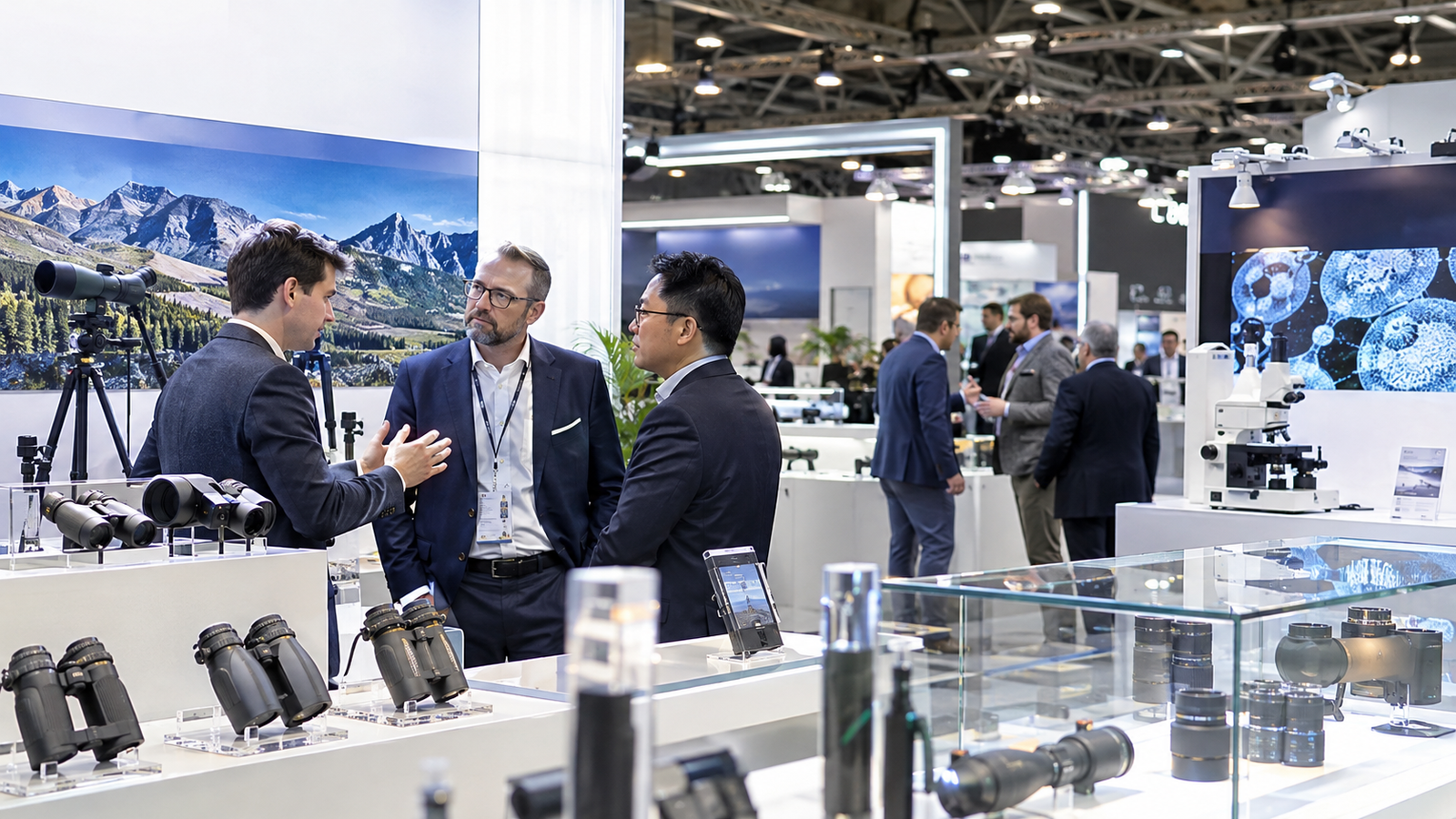
In a world where businesses can communicate through websites, video meetings, and online catalogs, traditional trade shows might seem less important than before. However, industry exhibitions continue to provide something digital communication cannot completely replace: the opportunity to meet professionals face-to-face, exchange ideas, and explore business opportunities in a shared environment. For specialized industries such as optical equipment manufacturing, these events remain valuable platforms for professional development and commercial relationships.
The global optics market includes manufacturers producing equipment for scientific research, photography, outdoor activities, and other specialized applications. Companies presenting collections such as Billings tactical scopes operate in a market where product knowledge and business connections are important. Industry exhibitions offer opportunities for businesses to understand market expectations, introduce their capabilities, and communicate with professionals from different parts of the world.
Why Optical Industry Exhibitions Attract Professionals
Trade shows bring together people who share an interest in a particular industry.
Unlike general shopping events, professional exhibitions often attract manufacturers, distributors, technical specialists, suppliers, and business representatives.
These visitors usually attend for specific reasons. Some want to learn about industry developments, while others are interested in meeting potential commercial partners.
The main advantage is the concentration of relevant professionals in one location.
A conversation that might otherwise require weeks of emails can sometimes begin during a short meeting at an exhibition.
These interactions do not automatically lead to business agreements, but they can establish useful professional connections.
For specialized industries, opportunities to communicate directly can be particularly valuable.
Choosing the Right Exhibition Matters
Not every exhibition serves the same audience.
Some events focus on broad manufacturing technologies, while others concentrate on a particular type of equipment or professional application.
Optical companies should understand these differences before deciding whether an event is relevant to their business.
For example, Optatec in Germany is an established exhibition focused on optical technologies, components, and related manufacturing systems.
Other industry events may concentrate on consumer equipment, outdoor products, or scientific instrumentation.
The right choice depends on the organization’s goals.
A company looking for component suppliers may benefit from a different event than one seeking retail distribution relationships.
Reviewing an exhibition’s official information, visitor profile, and previous exhibitor categories can help businesses determine whether participation makes sense.
What Visitors Can Learn at an Exhibition
Industry exhibitions are not simply collections of advertising displays.
They can provide opportunities for professional learning and discussions about developments across a particular market.
Visitors may discover unfamiliar companies, explore new business services, or attend presentations organized as part of the event.
Speaking directly with knowledgeable representatives can also help clarify information that appears complicated in a written catalog.
For example, a visitor interested in manufacturing services may ask about a company’s business processes or the documentation available for its products.
These conversations can help establish whether further professional discussions would be worthwhile.
The educational value of an exhibition often comes from exposure to different perspectives rather than a single presentation or product.
The Importance of Professional Product Presentation
An exhibition stand is often one of the first places where visitors encounter an unfamiliar company.
A professional display should communicate what the business offers without overwhelming people with unnecessary information.
Clear signage, accurate product descriptions, and an organized layout can make conversations easier.
Representatives should also understand the information they are presenting.
Visitors may ask questions about the company’s background, product categories, commercial arrangements, or available documentation.
When staff cannot answer reasonable questions, the business may lose an opportunity to establish trust.
Effective exhibition presentation is therefore about clarity and professionalism rather than expensive decorations alone.
Businesses should focus on making relevant information easy to understand.
Preparing for a Successful Trade Show
Participating in an exhibition requires planning before the event begins.
Businesses need to establish their objectives, prepare relevant information, and decide who will represent the company.
A practical preparation plan may include:
- Defining objectives: Identifying whether the event is intended for networking, market research, or commercial discussions.
- Preparing materials: Organizing accurate catalogs, company information, and presentation resources.
- Scheduling meetings: Contacting relevant business representatives before the exhibition.
- Training staff: Ensuring company representatives understand the event’s purpose and their responsibilities.
Preparation also involves reviewing the organizer’s rules and any applicable requirements concerning exhibits or regulated products.
Clear expectations allow employees to concentrate on meaningful conversations during the event.
How Exhibitions Support Distributor Relationships
Distributors play an important role in connecting manufacturers with different commercial markets.
Finding suitable distribution partners often involves more than exchanging contact details.
Businesses may need to discuss geographic coverage, commercial expectations, customer support, and the responsibilities of each organization.
Trade shows create opportunities for these initial discussions.
A distributor can learn about a manufacturer’s business background, while the manufacturer can better understand the distributor’s market experience.
However, a friendly conversation should not replace proper business evaluation.
Both parties need to review relevant information before entering a commercial relationship.
Exhibitions are most useful when they establish connections that can be developed through later professional communication.
Connecting Product Catalogs With Business Conversations
Online catalogs make specialized equipment easier to discover, but commercial discussions often require additional context.
A manufacturer may present several product categories online, with each collection containing individual models and technical descriptions.
For example, Billings tactical scopes appear within a dedicated category on the manufacturer’s website.
This type of organization gives business representatives a starting point for understanding a product collection.
At an exhibition, a discussion can move beyond the catalog to broader commercial questions, such as available information, company policies, or potential business arrangements.
The two channels serve different purposes.
A website makes product information accessible, while professional meetings create opportunities for direct communication.
Learning From Industry Conferences and Presentations
Many industry exhibitions include educational sessions alongside commercial displays.
These activities may feature researchers, business leaders, technical specialists, or representatives from professional organizations.
The subjects vary depending on the event.
Some presentations explore scientific developments, while others discuss market conditions, professional training, or challenges affecting manufacturers.
For attendees, these sessions can provide a broader understanding of the industry beyond their own organizations.
They also encourage discussion between professionals who may approach similar challenges from different perspectives.
However, conference presentations should still be evaluated critically.
A speaker’s opinion does not automatically establish a factual conclusion, and commercial claims should be supported by suitable evidence.
Opportunities for Smaller Businesses
Large manufacturers are not the only organizations that can benefit from trade shows.
Smaller businesses may use exhibitions to introduce their services, understand market expectations, and meet potential professional contacts.
For a relatively new company, attending as a visitor can be a practical first step.
This allows its representatives to observe the event and determine whether exhibiting would be worthwhile in the future.
Smaller companies should also consider the costs involved.
Exhibition space, travel, accommodation, promotional materials, and employee time can create substantial expenses.
Participation should therefore be connected to clear business objectives.
A carefully planned professional visit may provide more value than an expensive display without a defined purpose.
Why Honest Communication Matters at Industry Events
Exhibitions are promotional environments, but professional standards remain important.
Businesses should avoid presenting unverified claims as established facts or making misleading comparisons with competitors.
Product descriptions, company credentials, and commercial offers should be accurate and understandable.
This is particularly important in technical industries where terminology may be unfamiliar to some visitors.
Representatives should feel comfortable acknowledging when they need to verify information rather than providing an uncertain answer.
Responsible communication helps protect professional relationships.
It also allows visitors to evaluate businesses based on reliable information instead of exaggerated promises.
In the long term, credibility is more useful than generating attention through claims that cannot be supported.
The Relationship Between Digital and Physical Events
Digital communication has changed how organizations participate in professional exhibitions.
Businesses can now arrange meetings before an event, share electronic catalogs, and continue conversations afterward.
Some events also provide online directories or virtual participation options.
These tools can improve accessibility, particularly for professionals who cannot attend in person.
However, digital participation and physical exhibitions offer different experiences.
Online communication can be efficient for exchanging information, while face-to-face meetings may support more detailed professional discussions.
Neither format needs to replace the other.
A combined approach allows businesses to use digital resources for preparation and follow-up while benefiting from personal interaction when appropriate.
Why Follow-Up Is Essential After an Exhibition
The value of attending a trade show does not end when the exhibition closes.
Businesses often return with contact information, meeting notes, and questions requiring further attention.
Without an organized follow-up process, useful conversations can be forgotten.
Professional follow-up should refer to the actual discussion rather than relying on generic promotional messages.
If a representative promised additional information, providing an accurate response helps demonstrate reliability.
Businesses should also respect privacy requirements when collecting and using contact details.
Maintaining clear records allows teams to understand which conversations require attention.
An exhibition should be viewed as the beginning of potential professional relationships, not the completion of them.
Measuring the Value of Exhibition Participation
Businesses benefit from evaluating their exhibition experience after returning to normal operations.
Attendance numbers alone do not reveal whether participation was worthwhile.
A crowded exhibition stand may generate considerable attention without producing relevant business connections.
More meaningful evaluation considers the quality of discussions and whether the event supported its original objectives.
Useful questions include whether the company met appropriate contacts, gained relevant market knowledge, or identified promising opportunities for further discussion.
Companies should also compare these outcomes with the resources they invested.
This evaluation can help determine whether attending the same event again would be a sensible business decision.
Conclusion
Trade shows remain an important part of the optical equipment industry because they bring together professional knowledge, commercial opportunities, and direct communication. From specialized exhibitions to technical presentations, these events provide opportunities for businesses to learn about their market and develop relationships with other organizations.
For readers interested in understanding the types of specialized optical products represented within this wider industry, billingsoptics.com provides a manufacturer-focused catalog of rifle scopes and related product information. Such resources demonstrate how companies can introduce their product categories digitally while professional industry events create additional opportunities for business communication.
As the optical industry continues to develop, trade shows will remain one of several valuable ways for professionals to exchange ideas and explore commercial possibilities. Their greatest benefit comes from thoughtful preparation, meaningful conversations, and responsible follow-up. For businesses that approach exhibitions with clear objectives, these events can contribute to long-term learning and stronger professional relationships.