
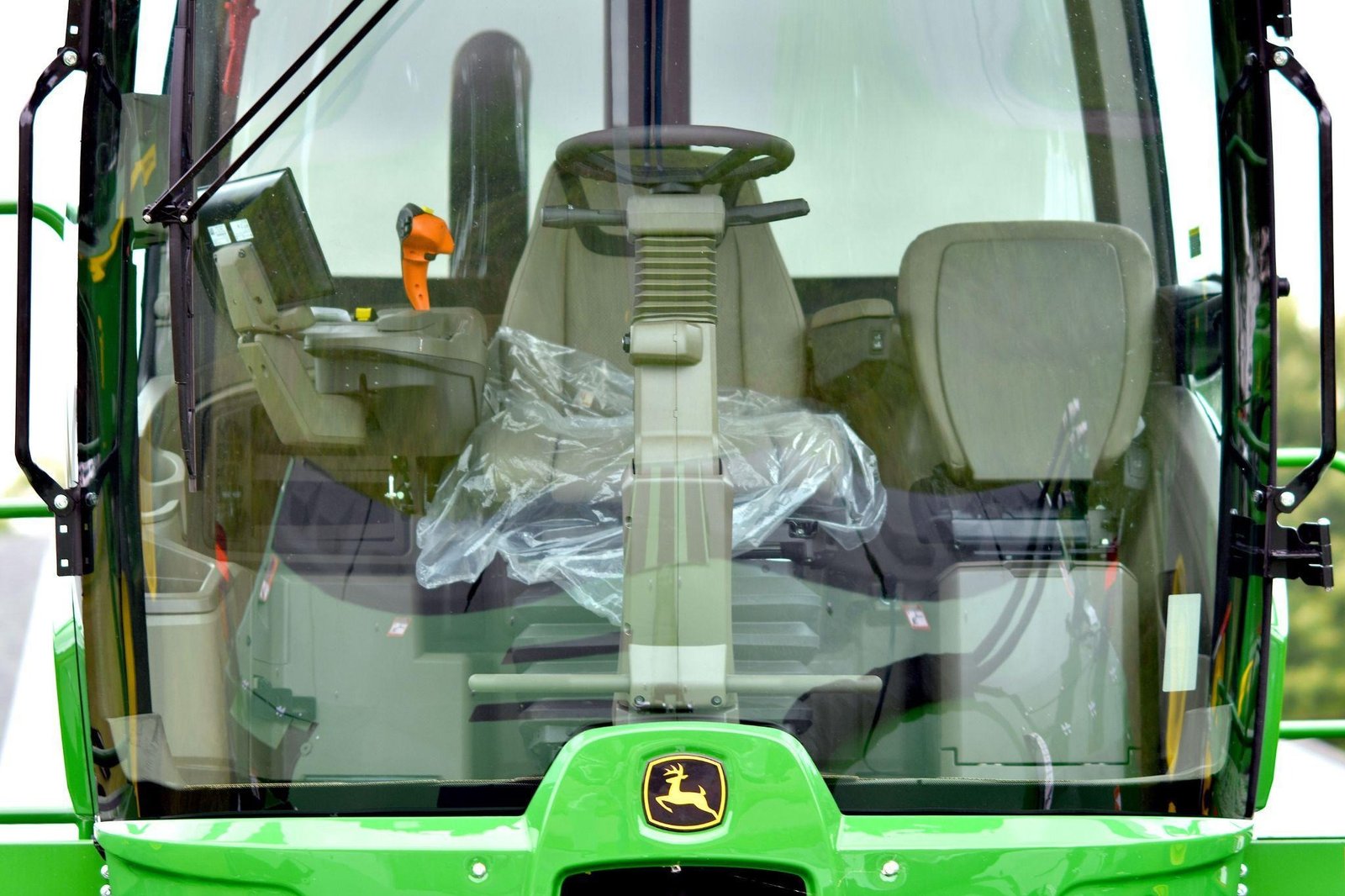
Agricultural technology is changing how farmers organize their daily field activities. While tractors remain essential for cultivation, planting, and other agricultural work, modern farming increasingly focuses on making every field operation more accurate and efficient. Technologies such as GPS guidance, digital field mapping, and electronic recordkeeping can help farmers understand how machinery moves across their land and identify opportunities to reduce unnecessary work.
For agricultural businesses exploring equipment from a farm tractor manufacturer in China, understanding these technologies can support better purchasing decisions. Not every tractor comes with advanced electronic systems, and not every farm requires them. However, learning how guidance technology works helps buyers decide whether basic machinery, optional electronic equipment, or compatible aftermarket systems will best meet their operational needs.
Why Accurate Tractor Movement Matters
When a tractor travels repeatedly across a field, the operator must maintain suitable spacing between consecutive passes. This becomes challenging when working across large areas or where previous wheel tracks are difficult to see.
Small steering differences can cause overlapping passes or leave narrow sections untreated. Overlapping may increase fuel consumption, working time, and input use, depending on the activity.
Field guidance technology helps operators follow more consistent routes. Instead of relying entirely on visual judgment, drivers can use positioning information to understand where the tractor should travel.
The practical advantage is greater consistency during repetitive operations, particularly when working with implements that cover wide areas.
Understanding How GPS Guidance Works
GPS guidance uses satellite positioning information to estimate the location of agricultural machinery within a field. A receiver collects positioning signals, while a compatible display or guidance system helps the operator follow a planned route.
In basic arrangements, the system displays steering instructions, and the operator controls the tractor manually.
More advanced systems can provide automatic steering assistance when the tractor and guidance equipment are properly configured.
Satellite guidance is not perfectly accurate under every condition. Performance depends on the receiver, correction service, terrain, surroundings, and equipment setup.
Understanding these limitations helps farmers choose technology that suits their tasks rather than expecting every guidance system to deliver identical results.
Manual Guidance and Automatic Steering
Manual guidance and automatic steering serve related purposes, but they operate differently.
With manual guidance, a screen indicates whether the driver should move left or right to remain close to the selected route. The operator continues controlling the steering wheel.
Automatic steering systems use additional hardware and software to help maintain the desired path with less continuous steering input.
Both approaches can support more consistent field operations, although their costs, installation requirements, and capabilities differ.
Automatic steering does not eliminate the driver’s responsibility for safe operation. Operators must remain attentive to obstacles, field boundaries, other workers, and changing ground conditions.
For smaller agricultural businesses, a simpler guidance system may provide sufficient assistance without requiring a more expensive installation.
Why Guidance Accuracy Should Be Considered Carefully
Not all agricultural activities require the same positioning accuracy. A farmer spreading material across a broad area may have different requirements from someone planting closely spaced crop rows.
Guidance specifications often distinguish between pass-to-pass accuracy and repeatability over longer periods.
Pass-to-pass accuracy describes how consistently a machine can follow neighboring routes during an operation. Repeatability becomes important when farmers want to return to nearly the same tracks during future activities.
Some high-precision arrangements use correction technologies such as real-time kinematic positioning, commonly known as RTK.
These systems can provide greater accuracy under suitable conditions, but they may require additional equipment, subscriptions, or access to correction signals.
The appropriate choice depends on the operation rather than simply selecting the most expensive technology.
Creating Useful Digital Field Maps
Digital field mapping allows farmers to organize information about the areas where their machinery operates.
A basic map may identify field boundaries, entrances, permanent obstacles, and important working areas.
More advanced applications can record machinery movement and connect field information with agricultural activities.
Before investing in guidance technology from any equipment provider, including a farm tractor manufacturer in China, buyers should understand whether their selected tractor can support the required hardware and installation.
Farmers may also need to consider whether existing guidance equipment can be transferred between machines.
A well-organized field map can provide a useful foundation for future planning, even when the farm is not ready to adopt automatic steering.
How Planned Driving Routes Reduce Unnecessary Passes
Repeated travel across the same field can become inefficient when operators have difficulty maintaining consistent spacing.
Guidance systems help establish planned routes based on the working width of the attached equipment.
For example, a farmer operating a fertilizer spreader can use suitable guidance information to maintain more consistent spacing between passes.
This may help reduce unnecessary overlap while limiting missed sections.
However, correct implement settings remain essential. An inaccurate working-width measurement or poorly adjusted attachment can still produce uneven results.
Farmers should therefore consider guidance technology as one part of a properly managed operation rather than a replacement for equipment calibration.
Using Field Records to Make Better Decisions
Digital information becomes more valuable when farmers use it to improve future decisions.
Some systems can record details about tractor movements, completed operations, and working areas. Even without advanced software, simple records can help agricultural businesses understand how their equipment is being used.
Useful information may include:
- Field identification: Which agricultural area received a particular operation.
- Working date: When planting, cultivation, or another activity was completed.
- Equipment details: Which tractor and implement were used.
- Operating time: How long the activity required.
- Field observations: Conditions or difficulties noticed during work.
These records can help farmers compare activities between growing periods.
They also provide useful information when planning labor, equipment use, and future field operations.
Supporting More Consistent Input Application
Fertilizers, seeds, and approved crop protection products should be applied according to crop requirements and appropriate agricultural guidance.
Unnecessary overlap during application can increase expenses and potentially contribute to uneven distribution.
Guidance technology can help operators maintain planned driving routes, but it does not automatically control the amount of material being applied.
Variable-rate application and automatic section control require additional compatible equipment and software.
Farmers should distinguish between navigation assistance and advanced application technology when comparing systems.
The benefits of precision equipment depend on correct calibration, suitable field conditions, and proper management decisions.
Accurate positioning is useful, but responsible application practices remain essential.
Recognizing the Limitations of Digital Technology
Precision agriculture equipment can offer practical advantages, but it also introduces new operating requirements.
GPS reception may become less reliable near dense trees, buildings, or other obstructions. Electronic displays and receivers also require correct installation and configuration.
Some systems depend on subscriptions or correction services that may not be available in every rural location.
Farmers should investigate these requirements before purchasing equipment.
Digital systems may also create additional training needs for operators who are unfamiliar with electronic controls.
A successful technology investment should make agricultural work more manageable rather than introduce complicated features that workers struggle to use.
Is Precision Technology Suitable for Smaller Farms?
Advanced agricultural technology is often associated with large commercial operations, but smaller farms may also benefit from selected digital tools.
The important question is whether the technology addresses a genuine operating problem.
For example, a small farm with irregularly shaped fields may find basic digital mapping useful for organizing activities. However, expensive automatic steering equipment may be difficult to justify if the tractor is used for relatively few hours.
Farmers should compare equipment costs with expected operational benefits.
Entry-level guidance systems, simple mobile recordkeeping, and carefully selected upgrades may be more practical starting points.
Purchasing technology gradually allows farmers to develop experience before committing to more advanced equipment.
Training Operators to Use Guidance Systems
Introducing digital equipment requires appropriate operator training.
Drivers need to understand how to establish field boundaries, enter implement dimensions, select guidance routes, and recognize positioning errors.
They should also know how to return to safe manual operation when electronic assistance is unavailable.
Training should begin in suitable conditions where operators can become familiar with the equipment without unnecessary pressure.
Farm managers should establish clear procedures for using guidance systems and recording completed work.
Regular discussions with operators can reveal whether the technology is genuinely useful or whether additional instruction is needed.
Good training helps ensure that digital equipment supports everyday agricultural activities safely and effectively.
Planning Future Tractor Technology Investments
Farmers do not need to install every available technology immediately. A more practical approach is to identify operational problems and select equipment that addresses them.
Agricultural businesses can begin with basic field records, investigate guidance options, and introduce additional technology when a clear need emerges.
Before purchasing an upgrade, buyers should confirm installation requirements, compatibility, technical support, and any ongoing service costs.
It is also worth considering how digital information will be stored and accessed. Farmers should understand who controls their field data and whether records can be transferred if they change equipment or software providers.
Careful planning helps prevent unnecessary spending while creating opportunities for future improvements.
Exploring Tractor Options for Modern Agricultural Work
Tractors provide the mechanical foundation for many agricultural activities, while digital technologies can offer additional support when correctly integrated. Buyers should therefore evaluate machine specifications and technology requirements separately rather than assuming advanced guidance features are standard.
The agricultural tractor range presented at gengjiaagri.com includes different horsepower categories and configurable equipment options for farming applications. Buyers can explore these models and discuss their intended operating requirements with the supplier. Anyone planning to use GPS guidance or other precision farming technology should specifically confirm electronic compatibility, installation possibilities, and available technical assistance before making a purchase.
Conclusion
GPS guidance and digital field records are helping farmers approach tractor operations with greater precision and organization. Consistent driving routes, useful field information, and carefully selected electronic tools can support more informed agricultural decisions.
However, successful adoption depends on understanding the farm’s actual requirements. Advanced technology is not automatically necessary for every operation, and its benefits depend on proper installation, operator training, and realistic expectations. By introducing suitable digital tools gradually, farmers can improve their understanding of field activities and make better use of agricultural machinery over time.