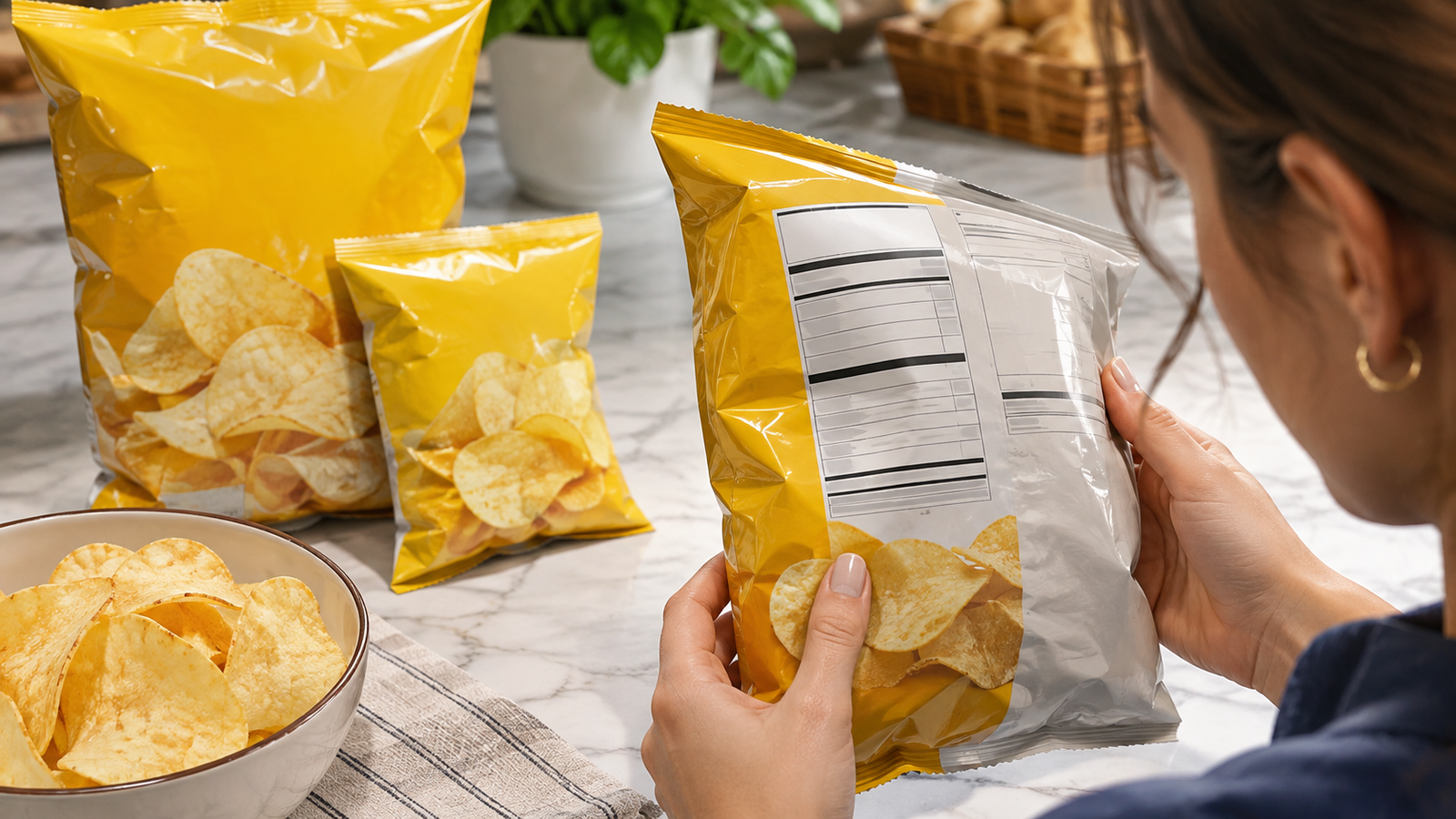
Potato chips are a popular snack enjoyed by people of different ages and lifestyles. Whether someone is shopping for groceries, preparing a quick lunch, or choosing something to eat during a break, chips are often an easy option. However, many shoppers focus mainly on flavor and price without paying much attention to the information printed on the package. Understanding the relationship between package quantity, serving information, and nutritional details can help consumers make more informed purchasing decisions.
Different chip bag sizes can influence how people understand serving quantities and compare snack products. A small package may contain one serving, while a larger bag can contain several servings even when its appearance suggests otherwise. For snack manufacturers, presenting clear information on different package formats is important for building customer confidence. Understanding how package quantity relates to nutrition labeling can benefit both consumers and businesses.
Why Serving Information Matters on Snack Packaging
Serving information helps shoppers understand how much food the nutritional values on a package represent. This becomes particularly important when comparing products that contain different quantities.
A bag may display nutritional values based on a specific serving rather than the entire package. If someone consumes more than that serving, their total intake will be higher than the values listed for one portion.
For example, a package containing three servings may list 150 calories per serving. Eating the entire bag would provide approximately 450 calories.
This does not mean larger packages are necessarily less suitable. It simply shows why understanding serving information matters.
Clear labeling allows customers to evaluate products based on the quantity they actually intend to eat.
Understanding the Difference Between Serving Size and Package Size
Serving size and package size are related, but they do not mean the same thing.
Package size refers to the total quantity of chips sold in a bag. Serving size refers to the amount of food used as the basis for the nutritional information.
In the United States, serving sizes on Nutrition Facts labels are based on standardized reference amounts that reflect typical consumption. They are not necessarily recommendations for how much someone should eat.
A small bag may be labeled as one serving, while a larger package may contain several servings.
Shoppers should therefore look at both the net weight and the number of servings when comparing products.
This distinction is especially helpful when purchasing snacks for household use or comparing nutritional information across brands.
How to Read the Nutrition Facts Label Correctly
Nutrition labels contain useful details that can help consumers better understand packaged foods.
Although labeling requirements differ between countries, many packages provide information about calories, fat, carbohydrates, protein, sodium, and serving quantities.
When reading a nutrition label, several details deserve attention:
- Serving size: Shows the quantity used to calculate nutritional values.
- Servings per container: Indicates approximately how many servings are included.
- Calories: Provides information about the energy supplied by the stated quantity.
- Sodium: Helps shoppers understand the amount of sodium in the product.
- Total fat: Shows the fat content for the stated serving.
Reading these details together provides a more complete understanding than checking calories alone.
It also makes nutritional comparisons more meaningful when products are sold in different package quantities.
Why the Number of Servings Can Be Misleading
One common shopping mistake is assuming that a bag contains only one serving because it looks small enough to finish.
In reality, some packages contain more than one serving.
If a person reads only the calories listed per serving, they may underestimate the amount consumed when eating the entire package.
For example, a bag containing two servings of 160 calories each would provide approximately 320 calories if the whole package were eaten.
Some food packages in the United States use dual-column nutrition labels, showing values per serving and per package to make comparisons easier.
FDA
Checking the number of servings before making a comparison can help consumers better understand the information presented on snack packaging.
Comparing Different Chip Packages Fairly
Comparing two bags of chips requires more than looking at their overall appearance or total price.
A larger package naturally contains more food, so comparing the total calories of two different-sized bags may not provide a useful picture of their nutritional differences.
Instead, consumers can compare equivalent quantities.
For example, if one product lists nutritional values for 28 grams and another lists values for 30 grams, the figures are reasonably close but not identical. A more precise comparison uses the same weight for both products.
Understanding chip bag sizes can therefore support better comparisons between snack products, especially when brands use different serving quantities.
Looking at equivalent amounts makes it easier to compare calories, sodium, and other nutritional information without confusing differences in package quantity with differences in the product itself.
Why Calories Are Only One Part of the Picture
Calories are useful information, but they do not describe every nutritional characteristic of a snack.
Two chip products may contain similar calories per serving while having different amounts of sodium, saturated fat, or other nutrients.
The ingredients and preparation methods can also influence their nutritional profiles.
For example, traditional fried potato chips and some baked snack products may have different fat contents. However, the exact difference depends on the ingredients and manufacturing process.
Consumers should avoid assuming that a product is automatically healthier simply because its package includes words such as “baked” or “light.”
Reading the complete nutritional information provides a clearer understanding of what the product contains.
Understanding Ingredient Lists and Allergen Information
The ingredient list is another important part of food packaging.
While traditional potato chips may contain relatively few ingredients, flavored varieties can include seasonings, dairy-based ingredients, flavor enhancers, and other components.
People with food allergies or dietary restrictions often rely on accurate ingredient and allergen information when selecting products.
For example, some cheese-flavored chips contain milk ingredients, while certain seasoning blends may include soy or wheat-derived components.
Packaging should communicate relevant ingredient information clearly according to applicable labeling requirements.
Consumers should read the information on the specific product rather than assuming all flavors from the same brand contain identical ingredients.
Clear labeling benefits everyone, particularly customers who need to make careful food choices.
How Packaging Language Influences Customer Expectations
Words printed on snack bags can influence how customers understand the quantity being offered.
Terms such as “family size,” “sharing pack,” and “party size” suggest different consumption situations. However, these marketing descriptions do not necessarily represent standardized quantities across every brand.
One manufacturer’s family package may contain a different amount from another manufacturer’s product with the same description.
For this reason, shoppers should use the printed net weight when comparing package quantities.
Manufacturers can improve customer understanding by making important product information easy to find.
Packaging descriptions should accurately communicate what customers are purchasing rather than creating unrealistic expectations about the amount included.
When packaging language is consistent and informative, it becomes easier for consumers to select suitable products.
Making Nutrition Information Readable on Smaller Packages
Smaller snack packages provide limited space for nutritional information, ingredients, and other required labeling details.
This creates a design challenge for manufacturers.
The packaging must communicate essential information without making the text difficult to read. Crowded layouts, unclear fonts, and poor contrast can make important details harder for shoppers to understand.
Designers should consider the available printing area when developing packaging for different product formats.
Some smaller packages may qualify for specific labeling formats or exemptions, depending on the regulations of the market where they are sold.
Businesses should therefore confirm applicable requirements rather than simply reducing the size of text used on larger packages.
Readable information supports customer understanding and helps create a more professional product presentation.
Understanding Nutrition Information on Multipacks
Multipacks are another packaging format where serving information deserves careful attention.
These products usually contain several individually packaged snacks inside one outer package.
A consumer may see nutritional information on the outer packaging and assume the values apply to the entire multipack.
However, the information may refer to one individual packet or another clearly stated quantity.
Shoppers should check how the nutrition information is presented before making comparisons.
For manufacturers, clear communication is particularly important when an outer package contains several smaller bags.
Customers should be able to identify the quantity and nutritional values associated with each individual pack.
This helps prevent confusion and makes the product easier to understand.
How Clear Product Information Builds Customer Trust
Snack brands depend on customer confidence, particularly when offering several products with different quantities and nutritional profiles.
Accurate labeling allows shoppers to understand what they are purchasing without relying on assumptions.
When a brand presents consistent serving information, readable ingredient lists, and clearly stated net weights, customers can compare its products more easily.
Good communication also demonstrates attention to detail.
Businesses should regularly review packaging information when changing product formulations, package quantities, or labeling designs.
Even a small adjustment to the amount of food inside a package may require updates to the information printed on it.
Maintaining accurate product details is an important part of responsible food packaging and long-term brand development.
Simple Ways to Make More Informed Snack Choices
Consumers do not need specialist knowledge to better understand chip packaging.
A few simple habits can make shopping decisions easier:
- Check the total net weight before comparing products.
- Read the number of servings included in the package.
- Compare nutritional values using similar quantities.
- Review ingredients when selecting unfamiliar flavors.
- Pay attention to sodium and saturated fat alongside calories.
- Read the information on the actual package rather than relying only on promotional descriptions.
These steps help shoppers understand the products they purchase while allowing them to choose snacks according to their preferences and nutritional needs.
Conclusion
Understanding the connection between chip bag size, serving information, and nutrition labeling can make snack shopping more transparent. Different package quantities serve different purposes, but clear product information helps consumers compare options accurately. From serving calculations to ingredient lists, every detail contributes to a better understanding of what is inside the package.
For food manufacturers, presenting accurate information is an important part of developing reliable snack packaging. Companies such as pallasmt.com provide packaging machinery and solutions for different packaging applications. Businesses can consider suitable equipment alongside package dimensions, labeling requirements, and product specifications when planning their packaging operations.
Ultimately, effective snack packaging should do more than attract attention. It should help customers understand the product, compare available options, and make purchasing decisions with confidence. When food brands combine practical packaging choices with clear and accurate information, they create a more informative shopping experience and establish stronger relationships with their customers.