
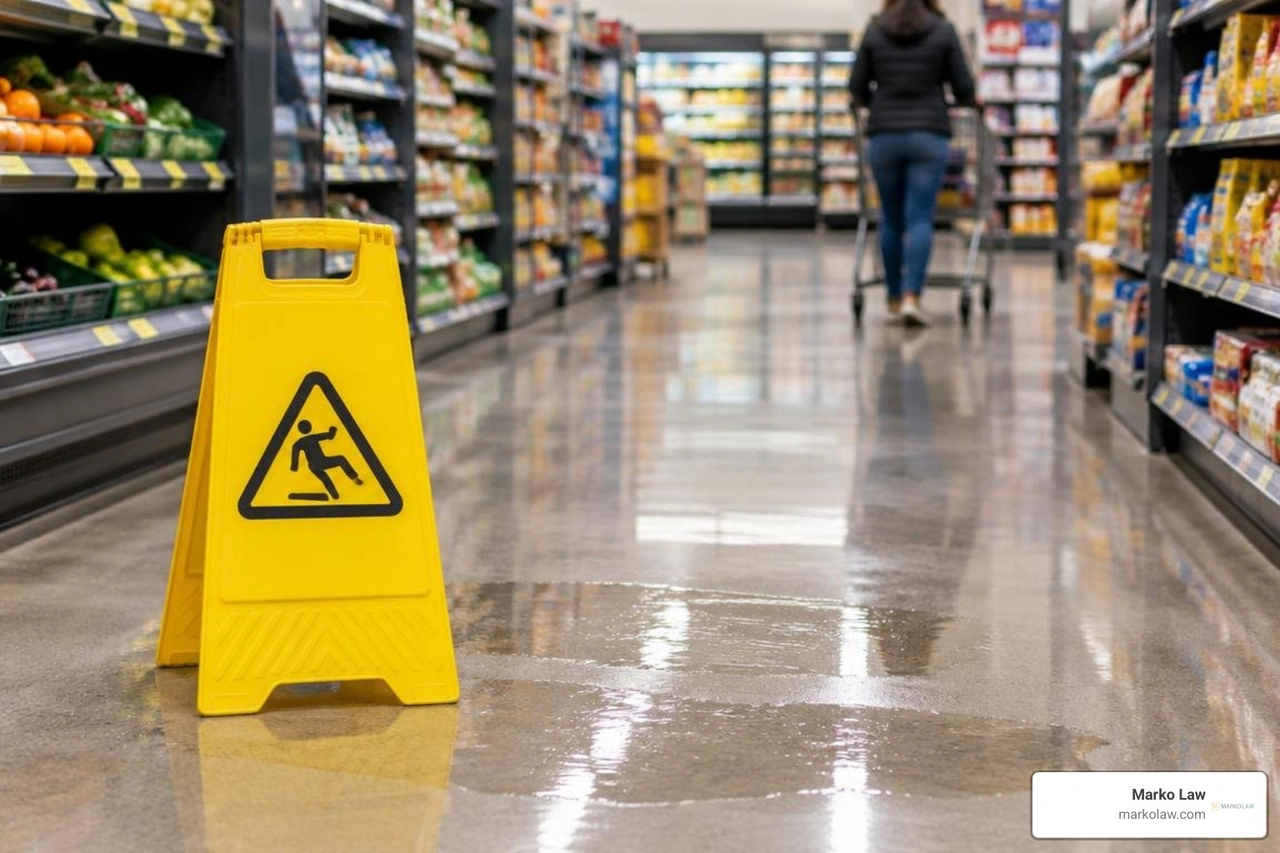
A grocery run is one of the most ordinary parts of the week. You grab a cart, work through your list, and head home. But grocery stores are also full of hidden fall risks, from grapes on the floor in produce to puddles near leaking freezer cases. A single misstep can lead to a broken wrist, a hip fracture, or a back injury that keeps you off work for weeks.
Washington law expects stores to keep their floors reasonably safe, but proving that a store failed to do so takes the right evidence. Speaking with a grocery store slip and fall attorney in Redmond can help an injured shopper understand whether a claim is worth pursuing. This guide walks through the store zones where falls happen most, the Washington rules that decide who pays, the steps to take after a fall, and the questions shoppers ask most often.
A Walk Through the Store’s Riskiest Zones
The Entrance and Vestibule
The first few steps inside the door are some of the most dangerous. Rain and snow get tracked in on shoes and cart wheels, leaving smooth tile slick. Floor mats help, but they can bunch up, curl at the edges, or become soaked and stop working. Stores are expected to manage this predictable problem on wet days with mats, warning signs, and regular mopping.
Produce, Deli, and Seafood
Produce sections combine loose fruit, misting systems, and shoppers handling items all day long. A dropped grape or leaf of lettuce can turn into a slick spot within seconds. Seafood counters and deli cases bring melting ice and dripping packages, which spread moisture onto nearby floors.
Freezer Aisles and Checkout Lanes
Freezer and cooler cases can leak from condensation or failing seals, leaving thin puddles that are hard to see under bright lighting. Near the checkout, spilled drinks, broken jars, and dropped items pile up as lines grow. Stock carts, pallets, and boxes left in aisles during restocking create tripping hazards, and parking lots add potholes, uneven curbs, and icy patches in winter.
The Washington Rules That Decide Who Pays
Shoppers are considered business invitees under Washington law, which means stores owe them a duty of reasonable care. That includes inspecting for hazards, fixing them within a reasonable time, and warning customers about dangers that are not obvious. The law does not expect a perfect store, but it does expect a careful one.
In most cases, an injured shopper must show that the store knew about the hazard or should have known about it. A store may have actual notice if an employee saw the spill or was told about it. Constructive notice means the hazard was there long enough that a reasonably careful store would have found it. Stores often fight this point by arguing the spill happened seconds before the fall.
Washington also recognizes an important exception. When the nature of a store’s business and the way it operates make a certain hazard reasonably foreseeable, the shopper may not need to prove notice at all. In Johnson v. Liquor and Cannabis Board, a 2021 case about a fall in a rainy store entryway, the Washington Supreme Court made clear that this exception is not limited to self-service areas. The shopper still has to show the store failed to take reasonable steps to deal with the foreseeable hazard, so evidence about mats, signs, and cleaning practices remains key.
Why Redmond Stores See So Many Falls
Redmond’s grocery stores stay busy from early morning until late at night. Shoppers fill stores like Fred Meyer, Safeway, QFC, Trader Joe’s, and Whole Foods, and many people stop by on the way home from work at the Microsoft campus and other tech employers in the area. Busy aisles, constant restocking, and long checkout lines give employees more to manage and more chances for a hazard to slip through.
Weather plays a big role here. The Puget Sound region sees steady rain for much of the fall, winter, and spring, which means wet shoes, wet carts, and wet umbrellas come through the doors every day. Entryways can stay slick for hours on stormy days. Under the foreseeability rule, a store that knows rain is coming is expected to plan for it rather than wait for someone to fall.
Redmond also has a wide range of shoppers, from young families with kids in carts to older adults who may have a harder time recovering from a fall. A slip that causes a bruise for one person can mean a broken hip and months of rehab for another, which is why stores are expected to treat floor safety as a constant part of the job.
Evidence to Gather Before You Leave the Store
The minutes after a fall often decide how strong a claim will be. If you are able, take photos of exactly what caused the fall, such as the puddle, the dropped item, or the curled mat, along with the surrounding area and any missing warning signs. Photos of your shoes and clothing can also help, since they may show the liquid or residue you slipped on.
Report the fall to a manager and ask that an incident report be written before you leave. Get the names of employees who responded and any shoppers who saw what happened. Witnesses can confirm how long a spill sat there or whether workers walked past it, which goes straight to the question of notice.
Store cameras are often the most valuable evidence, but many systems record over footage within days or weeks. Ask the store, in writing if possible, to keep all video from the time of your fall. Then see a doctor promptly, even if the pain seems minor at first, and keep every bill and record. Washington generally allows three years to file a lawsuit, but cameras, cleaning logs, and memories fade much faster.
Frequently Asked Questions
Can I still recover money if I was looking at my phone when I fell? Possibly. Washington uses a pure comparative fault system, so your recovery may be reduced by your share of fault, but it is not automatically barred. The store’s failure to clean up a known hazard still matters even if you were distracted.
What if the store says the spill happened right before I fell? This is one of the most common defenses. Video footage, witness statements, and the condition of the spill, such as footprints or cart tracks through it, can help show it had been there longer. In some cases, the foreseeability rule may also apply if the hazard was a predictable part of the store’s operations.
Does a wet floor sign protect the store from liability? Not always. A sign can help, but it must be placed where shoppers can actually see it and must match the real hazard. A small sign far from a large puddle, or a sign left out long after the floor dried, may not be enough.
Should I accept the store’s offer to pay my emergency room bill? Be careful. An early offer may come with paperwork that releases the store from further responsibility. Before signing anything, make sure you understand the full extent of your injuries and whether you will need more treatment.
How long do I have to file a claim in Washington? In most cases, you have three years from the date of the fall to file a lawsuit. Waiting that long is risky, though, because store video and other key evidence often disappears within weeks.
Shopping Safely and Knowing Your Rights
Most grocery store falls come from everyday hazards that stores know about and can control, such as wet entryways, dropped produce, leaking coolers, and cluttered aisles. Washington’s notice rules, its foreseeability exception, and its comparative fault system all shape whether an injured shopper can recover. For Redmond shoppers, quick action after a fall, including photos, an incident report, a request to save video, and prompt medical care, gives the best chance of turning an unfair injury into a fair result.