
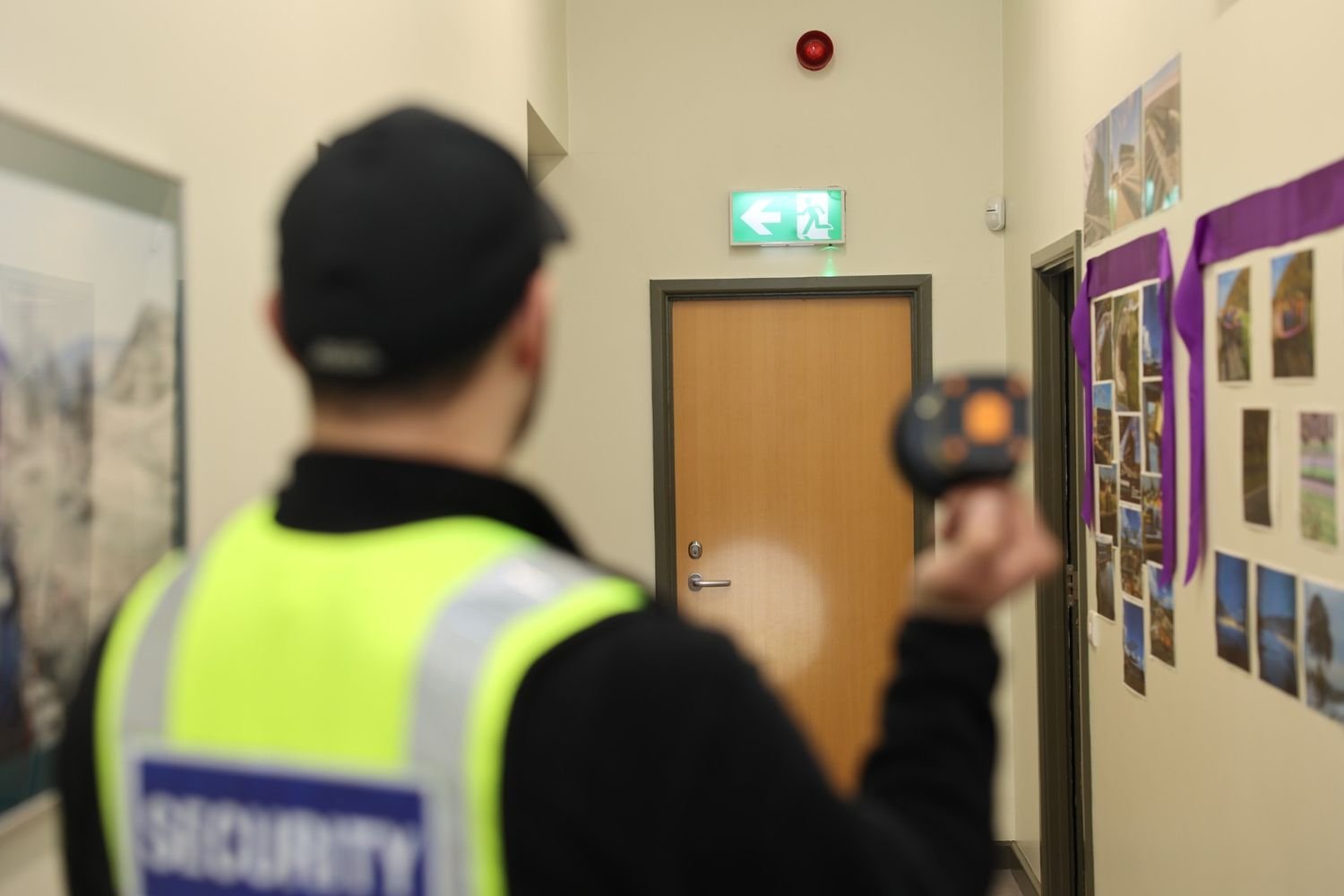
A locked entrance tells a patrol officer one thing: the door is secured at the moment of inspection. It says nothing about the fence behind the building, the dark walkway beside it, or the delivery pallets blocking an exit. An officer who checks the handle and moves on leaves much of the property unexamined.
A useful patrol follows what is happening around the building. That requires getting out of the vehicle where necessary, knowing the usual condition of the property, and recording changes clearly enough for someone else to act. When reading reviews of guards on call, look for accounts of how officers handled these everyday details, rather than general praise alone.
A Damaged Fence Deserves a Closer Look
A bent fence panel beside a loading area deserves attention even when the gate remains locked. Look for gaps beneath the fence, damaged fasteners, and objects placed against it. A discarded crate near the perimeter warrants a different note than ordinary litter if it appears positioned as a step.
The report should describe the damage without guessing who caused it. “Fence panel bent inward beside the rear gate” gives maintenance staff something specific to inspect. “Possible break-in” introduces a conclusion that the physical evidence alone does not establish. Photographs and a precise position make the observation easier to verify.
Walk the Route Employees Actually Use
An entrance looks different through a windshield than it does on foot. A patrol vehicle’s headlights briefly illuminate areas that return to darkness as soon as it passes. Officers should check pedestrian routes under the lighting employees actually rely on.
That includes the path between staff parking and the entrance, steps near service doors, and corners hidden by vegetation. Record which fixture is out and what remains difficult to see. Reporting “poor lighting” is less useful than identifying an unlit stairway beside the employee entrance.
Fun fact: A brighter light does not always improve visibility. An exposed light source that shines directly into someone’s eyes creates glare, making nearby details harder to distinguish. During a patrol, looking toward a fixture sometimes reveals a visibility problem that looking beneath it misses.
Deliveries Should Not Become Obstacles
A delivery left outside a closed receiving area changes the walking route around a building. Staff arriving before sunrise encounter boxes, wrapping, or pallets that were absent during the previous shift. Even an authorized delivery needs attention if it blocks access.
Patrol officers should note obstructed exits, materials left across walkways, and vehicles parked across access points. Their response should follow site instructions, with urgent hazards reported promptly to the responsible contact. Photographing the obstruction is useful, but the job also requires making sure the report reaches someone responsible for addressing it.
Signs of Entry Are Not Always at the Main Door
Fresh damage around a service-door latch, a displaced window screen, or a gate that no longer closes properly deserves a closer inspection from a safe position. Comparing the condition with earlier patrol notes helps distinguish an existing defect from a recent change.
An officer who finds signs of forced entry should follow the escalation procedure rather than enter alone to investigate. Record the discovery time and avoid disturbing the area unnecessarily. A factual description gives responding personnel a clearer starting point than an unsupported explanation of what happened.
If an Employee Is Injured
If an employee is hurt, immediate assistance and appropriate medical attention come first, followed by prompt notification to the employer. The incident record should distinguish the time of the injury, if known, from the time the patrol officer arrived or received the report. Describe the conditions observed, identify witnesses, and separate their accounts from firsthand observations. Existing patrol photographs, access records, and relevant camera footage deserve prompt preservation under the property’s procedures. Together, these records establish a timeline: what was reported earlier, what the area looked like, and what changed afterward. They do not determine entitlement to benefits by themselves. An employee comparing legal representation through Riverside workers compensation lawyer reviews should look for comments about clear communication and attention to case details. Having those records ready gives the employee a clearer factual account to discuss with the attorney they choose. The legal process depends on the circumstances of the injury.
The Next Patrol Needs an Answer
A reported defect should remain on the handover until someone confirms what happened to it. The next officer needs to know that the rear light was reported, who received the message, and whether it still needs repair.
“Previously reported” is not a repair status. On the next visit, check the stairway again.