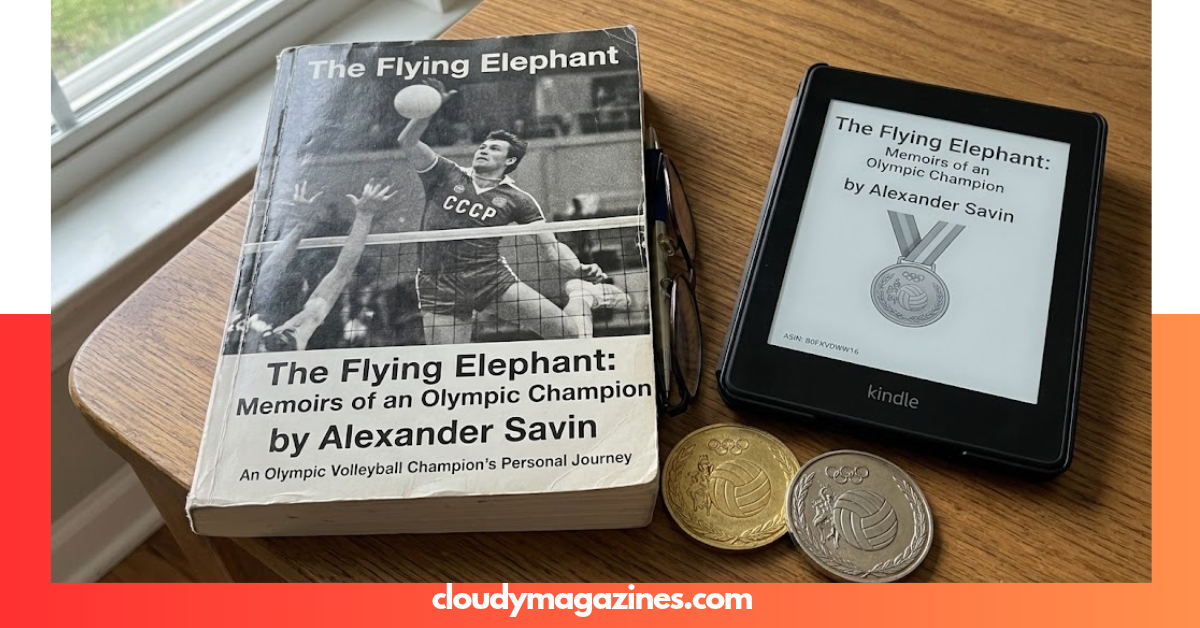
Finding an interesting sports biography can be difficult when you want more than medal records and match results. Many Olympic athletes have remarkable personal experiences, but their stories receive less attention than their victories. The Flying Elephant: Memoirs of an Olympic Champion brings attention to Alexander Savin, a celebrated Soviet volleyball player whose career included two Olympic medals. This guide explores his sporting background, Olympic achievements, the reported Kindle edition, and why volleyball history enthusiasts may find his story worth exploring.
What Is The Flying Elephant: Memoirs of an Olympic Champion?
The Flying Elephant: Memoirs of an Olympic Champion is a sports memoir attributed to Alexander Savin, a former Soviet volleyball player who achieved international recognition during the 1970s and 1980s.
The book focuses on the life and sporting experiences of an athlete who competed at the highest level of international volleyball. Its subject connects personal sporting memories with an important period in Soviet Olympic history.
Unlike a general volleyball instruction manual, this title is positioned as a personal account of an athlete’s journey. Readers interested in Olympic competition, professional sports careers, and historical volleyball may find its subject particularly relevant.
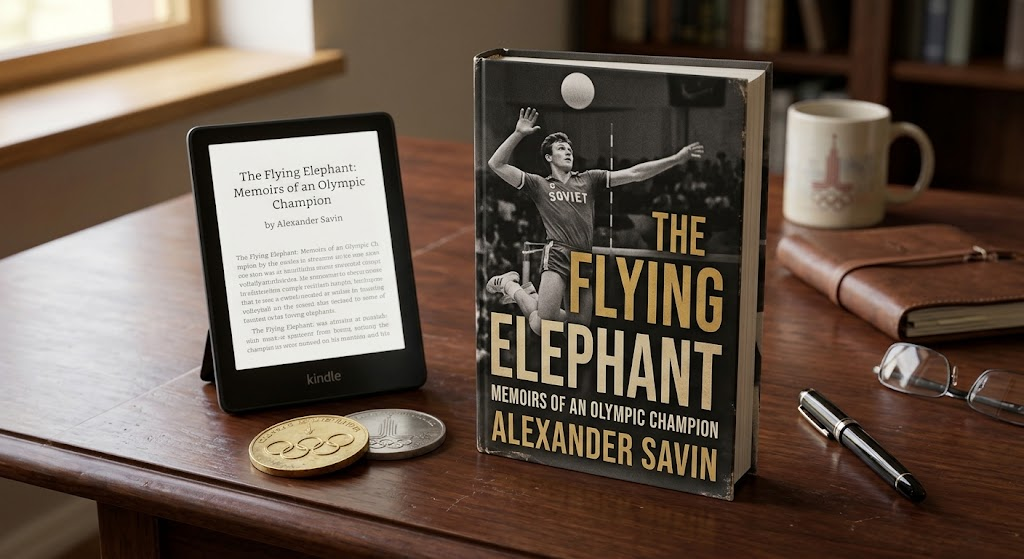
The English Kindle edition is associated with the Amazon product identifier B0FXVDWW16. Readers should check the live product listing for current edition information and availability.
Who Is Alexander Savin?
Alexander Savin, also known as Aleksandr Borisovich Savin, is a former Soviet volleyball player born on July 1, 1957, in Taganrog, Russia.
He became one of the recognized players of Soviet men’s volleyball during an era when the national team achieved considerable international success. His playing career included Olympic appearances, world championship victories, and European championship titles.
Savin represented the Soviet Union at the 1976 Montreal Olympics and the 1980 Moscow Olympics. He earned a silver medal in Montreal before helping his team secure Olympic gold in Moscow.
His achievements later earned him induction into the International Volleyball Hall of Fame in 2010.
According to the Hall of Fame’s official biography, Savin played in every match during both Olympic campaigns. This record highlights his importance to the Soviet team.
Why Is Alexander Savin Called The Flying Elephant?
The title The Flying Elephant is distinctive because it combines two contrasting ideas. An elephant represents strength and physical power, while flying suggests movement, agility, and athletic ability.
In volleyball, players must combine strength with speed, coordination, timing, and jumping ability. A powerful athlete must also move quickly and react to the ball within seconds.
The title creates an interesting connection with the physical demands of professional volleyball. However, the precise historical origin of the nickname and its personal meaning should not be presented as confirmed without a direct explanation from Savin or the book itself.
Readers should distinguish the title’s symbolism from verified biographical facts.
What Makes Alexander Savin’s Volleyball Career Important?
Alexander Savin competed during a highly successful period for Soviet men’s volleyball. The national team regularly faced strong international opponents and developed a reputation for technical ability, teamwork, and competitive discipline.
His career demonstrates how individual performance contributes to a team’s overall success.
Several achievements make his sporting background particularly noteworthy:
- Olympic success: He won silver in 1976 and gold in 1980.
- World championship victories: He was part of the Soviet teams that won world titles in 1978 and 1982.
- European championships: His career included six European championship victories.
- World Cup achievements: He participated in successful Soviet World Cup campaigns.
- International recognition: He entered the International Volleyball Hall of Fame in 2010.
These achievements provide useful historical context for readers exploring his memoir.
Alexander Savin at the 1976 Montreal Olympic Games
The 1976 Summer Olympics in Montreal marked an important stage in Savin’s international career.
The Soviet men’s volleyball team entered the competition with strong expectations. The squad progressed through the tournament and reached the gold-medal match.
However, Poland defeated the Soviet Union in the final, leaving Savin and his teammates with the silver medal.
The result was significant because Olympic competition requires consistent performance across several demanding matches. A silver medal also demonstrated the team’s position among the world’s strongest volleyball nations.
For readers interested in athlete development, this tournament provides an important example of the difference between reaching the final and winning the championship.
How Did Alexander Savin Win Olympic Gold in 1980?
The 1980 Moscow Olympics became the defining Olympic achievement of Savin’s career.
After winning silver four years earlier, the Soviet volleyball team returned with the goal of reaching the top of the podium. Playing in front of a home crowd added another important dimension to the competition.
The Soviet team performed strongly throughout the tournament and reached the final against Bulgaria.
The Soviet Union defeated Bulgaria 3–1 to win the men’s volleyball gold medal.
Savin played in all six matches during the Olympic campaign, according to the International Volleyball Hall of Fame.
This victory completed an important progression in his Olympic career: silver in Montreal followed by gold in Moscow.
What Can Readers Expect From The Flying Elephant Memoir?
Readers considering this book should understand its central subject before purchasing it.
The memoir is presented as a personal sporting account connected with Savin’s career, Olympic experiences, and life in volleyball. Its historical interest comes from the perspective of an athlete who experienced major international competitions during the Soviet era.
The following themes provide useful context when approaching the book:
1. Professional Volleyball
Competitive volleyball requires more than physical strength. Players must develop positioning, communication, timing, coordination, and decision-making skills.
Savin’s career provides a historical example of professional volleyball at the highest international level.
2. Olympic Competition
The Olympic Games represent an important part of the memoir’s subject. Savin experienced both the disappointment of losing a final and the achievement of winning Olympic gold.
3. Soviet Sports History
His playing years coincided with a successful period for Soviet volleyball. Readers interested in the sporting institutions and international competitions of that period may appreciate this historical background.
4. Teammates and Coaches
Team sports depend on relationships between athletes, coaches, and support staff. Understanding these connections helps readers appreciate the collective effort behind Olympic achievements.
5. Life Beyond Competition
Savin’s professional involvement with volleyball extended beyond his playing career into coaching and sports development. This provides another reason to explore his story as more than a record of medals.
Note: These are subject areas relevant to Savin’s documented career and the book’s memoir positioning, not a verified chapter-by-chapter summary. Consult the actual book preview for specific chapter contents.
The Flying Elephant Kindle Edition: Complete Book Details
The Kindle edition offers a digital reading option for people interested in Alexander Savin’s sporting story.
Available online edition information identifies the English-language version with the Amazon ASIN B0FXVDWW16. The following table separates reported publication details from information readers should verify before buying.
| Book Detail | Information |
| Full Title | The Flying Elephant: Memoirs of an Olympic Champion |
| Author | Alexander Savin |
| Author’s Recorded Name | Aleksandr Borisovich Savin |
| Book Category | Sports Memoir / Biography |
| Main Subject | Olympic Volleyball |
| Format | Kindle Edition |
| Reported Language | English |
| Reported Publication Date | October 26, 2025 |
| Reported Print Length | 514 pages |
| Reported File Size | Approximately 68.8 MB |
| Amazon ASIN | B0FXVDWW16 |
| Olympic Silver Medal | 1976 Montreal |
| Olympic Gold Medal | 1980 Moscow |
| Hall of Fame Induction | 2010 |
| Main Audience | Volleyball Fans, Sports Readers, and Olympic History Enthusiasts |
| Current Price | Check the Amazon marketplace |
| Kindle Unlimited | Verify current regional eligibility |
| Paperback Availability | Check the current retailer catalogue |
| Audiobook Availability | Check the current retailer catalogue |
Important: The page count, file size, and publication date are reported edition details rather than independently verified physical-book measurements. Amazon can change its listing information and regional availability.
How to Find The Flying Elephant on Amazon Kindle
Finding the correct digital edition is easier when you use both the full book title and the author’s name.
Follow these steps:
- Open the Amazon Kindle Store.
- Search for The Flying Elephant: Memoirs of an Olympic Champion.
- Enter Alexander Savin as the author.
- Look for the Kindle edition.
- Check the product identifier B0FXVDWW16.
- Confirm that the displayed language is English.
- Review the available sample, if offered.
- Check the current price and purchasing conditions.
- Complete your purchase only after confirming the correct edition.
Using the ASIN can help reduce confusion with unrelated books that share similar titles.
Can You Read Alexander Savin’s Book Without a Kindle Device?
Yes. A dedicated Kindle e-reader is not necessarily required to enjoy a Kindle book.
Amazon’s Kindle applications allow readers to access supported digital books on compatible devices.
Depending on regional availability and device compatibility, readers may use:
- Android smartphones
- iPhones
- Android tablets
- iPads
- Windows computers
- Mac computers
- Amazon Kindle e-readers
To get started, download the appropriate Kindle application, sign in with your Amazon account, and access your purchased library.
Check the individual book listing for device compatibility and supported reading features before purchasing.
Why Is The Flying Elephant Interesting for Volleyball History Enthusiasts?
Sports history becomes more meaningful when readers understand the people behind major victories.
Official competition records can show who won a match, which team received a medal, and when a championship took place. However, a personal memoir offers a different reading experience because it is built around an athlete’s memories and perspective.
Savin’s career is particularly interesting because it connects several important areas of volleyball history:
- The development of elite Soviet volleyball.
- International men’s volleyball competition.
- The Olympic tournaments of 1976 and 1980.
- World championship success.
- The professional development of a long-term athlete.
- The transition from competitive playing to coaching.
For readers researching historical volleyball, the book’s subject offers a useful starting point for exploring the people and sporting events behind the results.
What Can Young Volleyball Players Learn From Alexander Savin’s Career?
Although a memoir is not a substitute for professional coaching, the career of an Olympic champion can offer useful lessons for aspiring athletes.
Savin’s documented achievements provide several examples worth considering.
Consistency matters: Performing at a high level across several international competitions requires preparation and discipline.
Teamwork creates results: Volleyball is a team sport. Even highly talented players depend on communication and cooperation.
Setbacks can become motivation: Savin experienced Olympic silver before achieving gold four years later.
Long-term development is important: His career included success across multiple championships and continued involvement in the sport.
Learning does not stop after competition: His later coaching work demonstrates how experienced athletes can continue contributing to their sport.
These lessons make his sporting journey relevant beyond the final medal count.
Alexander Savin’s Life After Olympic Volleyball
An athlete’s influence does not necessarily end when competitive playing comes to a close.
Savin continued his involvement in volleyball through coaching and sports administration. His professional record includes coaching positions and work connected with the development of the sport.
His achievements also received institutional recognition.
The International Volleyball Hall of Fame inducted him in 2010 in the male indoor player category. His profile remains part of the Hall of Fame’s historical record.
The CSKA official sports profile also documents his playing achievements, coaching career, and championship record.
This wider career gives readers a better understanding of his contribution to volleyball.
Who Should Read The Flying Elephant: Memoirs of an Olympic Champion?
The book’s subject makes it particularly relevant to readers who enjoy sports biographies and Olympic history.
It may be worth exploring if you belong to any of these groups:
- Volleyball enthusiasts: Readers interested in the history and development of international volleyball.
- Olympic history readers: People who enjoy learning about athletes behind major Olympic victories.
- Sports biography fans: Readers who prefer personal sporting accounts over general sports reference books.
- Soviet sports researchers: People studying the history of Soviet international competition.
- Young athletes: Players interested in the career journeys of successful professionals.
- Sports coaches: Professionals looking for historical perspectives on elite team sports.
Readers who mainly want volleyball techniques or training drills should choose a coaching manual instead. This title is presented as a memoir, not a technical instruction guide.
What Should You Check Before Buying the Kindle Edition?
Before purchasing any digital biography, it is worth checking the product information carefully.
Use this checklist to make a more informed decision:
- Confirm the author’s name.
- Check the complete book title.
- Verify the Kindle format.
- Review the language.
- Check the current price in your Amazon region.
- Look for a free sample or preview.
- Review available customer feedback.
- Check the listed page count.
- Confirm device compatibility.
- Review Kindle Unlimited availability, if relevant.
A little research can help prevent purchasing the wrong edition or an unrelated book with a similar name.
The Historical Importance of Alexander Savin’s Olympic Achievements
Savin’s Olympic record is one of the strongest reasons his biography attracts attention.
His two Olympic medals represent achievements from different stages of his career. The 1976 silver medal established his place among international volleyball competitors, while the 1980 gold medal marked the highest level of Olympic success.
The following timeline provides a simple overview.
| Year | Event | Achievement |
| 1957 | Birth in Taganrog | Alexander Savin was born |
| 1976 | Montreal Summer Olympics | Silver medal in men’s volleyball |
| 1978 | World Championship | Gold medal with the Soviet Union |
| 1980 | Moscow Summer Olympics | Olympic gold medal |
| 1982 | World Championship | Another world championship gold |
| 1985 | European Championship | Part of the Soviet championship-winning era |
| 2010 | International Volleyball Hall of Fame | Inducted as a male indoor player |
These milestones show why Savin deserves attention in discussions about historic Soviet volleyball.
How Does The Flying Elephant Fit Into Sports Biography Literature?
Sports biographies preserve stories that traditional competition records cannot fully explain.
A medal table records an athlete’s results, but it cannot capture every experience connected with preparation, team relationships, personal challenges, and professional development.
Memoirs provide a different way to explore these subjects. They allow readers to approach sporting history through the memories and perspective of an individual participant.
Alexander Savin’s documented Olympic career gives this title a clear historical context. Readers interested in the relationship between personal sporting experiences and major international competitions may find the memoir’s subject valuable.
However, readers should consult the actual edition before making claims about particular chapters, quotations, or personal anecdotes.
Frequently Asked Questions
1. Who wrote The Flying Elephant: Memoirs of an Olympic Champion?
Alexander Savin wrote the memoir. He is a former Soviet volleyball player who won Olympic silver in 1976 and Olympic gold in 1980. He was inducted into the International Volleyball Hall of Fame in 2010.
2. Is The Flying Elephant available on Amazon Kindle?
Yes. An English-language Kindle edition is associated with Amazon ASIN B0FXVDWW16. Search using the complete title and author name, then check your regional Amazon store for current availability.
3. How many pages does the Kindle edition contain?
The reported Kindle edition has a print length of 514 pages. Digital page counts can vary with formatting and reading settings, so check the current Amazon listing for the latest information.
4. What sport is Alexander Savin famous for?
Alexander Savin is famous for volleyball. He represented the Soviet Union in international competitions and became an Olympic champion at the 1980 Moscow Games.
5. What Olympic medals did Alexander Savin win?
Savin won two Olympic medals with the Soviet men’s volleyball team. He received silver at the 1976 Montreal Olympics and gold at the 1980 Moscow Olympics.
6. Who should read The Flying Elephant memoir?
The book is particularly relevant to volleyball fans, Olympic history enthusiasts, sports biography readers, coaches, and people interested in Soviet-era international sports. Readers should check the available preview to decide whether its subject and writing style suit their interests.
Conclusion
The Flying Elephant: Memoirs of an Olympic Champion brings attention to the sporting journey of Alexander Savin, an athlete whose career included Olympic medals, world championship success, and recognition from the International Volleyball Hall of Fame.
His progression from silver in Montreal in 1976 to gold in Moscow in 1980 makes his Olympic history especially interesting. His continued involvement in volleyball also demonstrates how an athlete can contribute to a sport beyond competitive matches.
For readers interested in Olympic history, Soviet volleyball, and sports biographies, this title is worth investigating. Check the English Kindle edition, review its available preview, and confirm the current product details before purchasing.
Have you read a biography of an Olympic champion? Share your favorite sports memoir and the athlete whose journey inspired you.