
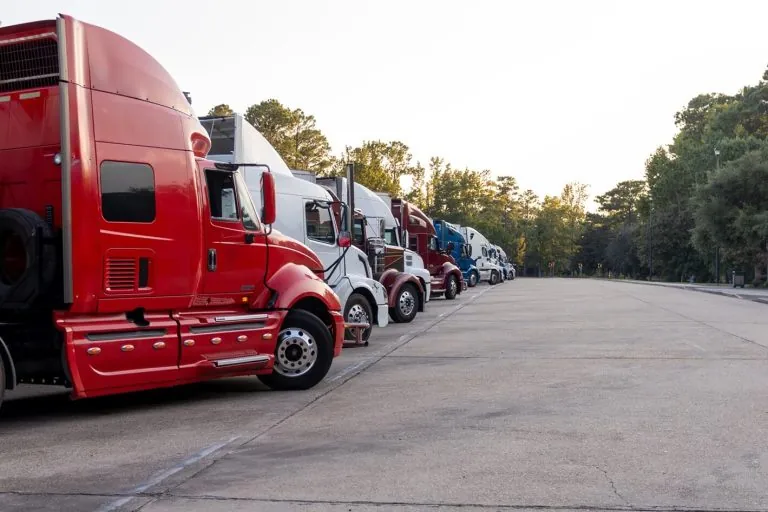
Finding suitable parking for commercial trailers is an important part of managing transportation, logistics, and trucking operations. Owner-operators, fleet managers, and trucking companies may need dedicated spaces for trailers between loads, during seasonal slowdowns, or while equipment is waiting for its next assignment.
Choosing the right commercial trailer parking location involves more than finding an empty space. Businesses should consider trailer dimensions, property access, location, parking conditions, permitted duration, and operating requirements. For companies that need recurring space, monthly trailer parking can be a practical option for managing equipment over an extended period.
This guide explains what to look for when comparing commercial trailer parking locations and how to select an arrangement that fits your business.
1. Identify Your Commercial Trailer Parking Needs
Start by identifying the types and number of trailers your business needs to park. Different trailer configurations may require different space dimensions and property arrangements.
Common commercial trailer types include:
- Dry van trailers
- Refrigerated trailers (reefers)
- Flatbed trailers
- Gooseneck trailers
- Utility and cargo trailers
- Equipment trailers
- Semi-trailers
Record each trailer’s length, width, height, and other relevant specifications. Also determine whether trailers will be parked independently or remain attached to tractors.
Understanding your equipment requirements makes it easier to identify suitable properties and avoid locations that cannot accommodate your trailers.
2. Choose a Location That Supports Your Operations
Location plays an important role in selecting commercial trailer parking. A convenient property can make it easier for drivers and fleet staff to access equipment when it is needed.
Consider parking locations near:
- Major highways and freight corridors
- Warehouses and distribution centers
- Industrial parks
- Shipping and logistics facilities
- Trucking company depots
- Regular pickup and delivery areas
Check the road route to the property, not just its distance from your business. Narrow roads, low-clearance structures, restricted routes, and difficult entrances can create problems for large commercial equipment.
For businesses operating across multiple locations, comparing parking options near important freight routes may help simplify equipment planning.
3. Verify Trailer Dimensions and Space Availability
Not every parking property can accommodate every type of commercial trailer. Before booking, confirm that the available space is appropriate for your equipment.
Important details include:
- Parking space length and width
- Trailer height restrictions
- Entrance and exit clearance
- Turning and maneuvering room
- Spacing between parked trailers
- Surface condition and applicable weight restrictions
If your fleet includes specialized equipment such as refrigerated trailers or longer flatbeds, communicate those specifications before selecting a property.
Also confirm whether detached trailers are accepted and whether the property has restrictions on loaded or empty trailers.
4. Consider Monthly Trailer Parking for Recurring Needs
Businesses that regularly need parking may benefit from comparing recurring arrangements rather than searching for a new location every time equipment needs to be stored.
Monthly trailer parking may be suitable for:
- Trailers waiting between assignments
- Equipment used for seasonal operations
- Reserve trailers maintained by a fleet
- Trailers positioned near distribution centers
- Commercial equipment that is temporarily inactive
Before agreeing to a monthly arrangement, review the payment terms, renewal conditions, permitted parking duration, access rules, and procedures for retrieving equipment.
Confirm whether the monthly arrangement applies to a specific parking space, a particular trailer, or multiple units. Terms can differ between properties.
5. Evaluate Property Conditions and Access
A parking location should be practical for both the equipment and the people responsible for moving it.
When comparing properties, review:
- Parking surface and drainage
- Entrance and exit layout
- Space for maneuvering trailers
- Access hours and entry procedures
- Rules for moving or retrieving equipment
- Restrictions on trailer configurations
- Procedures for extending or ending a parking arrangement
For long-term use, ask whether there are any requirements for periodic property checks or equipment movement.
Do not assume that every facility offers paved surfaces, lighting, fencing, surveillance, or 24-hour access. Verify the actual features and arrangements directly with the property owner or operator.
6. Review Security Arrangements for Commercial Trailers
Commercial trailers are valuable business assets, so security should be part of the location evaluation process.
Depending on the property, available features may include:
- Fenced or enclosed parking areas
- Controlled entry and exit
- Gate access procedures
- Surveillance cameras
- Security lighting
- On-site personnel
These features are not available at every location. Ask the property operator which measures are provided and whether there are specific rules for overnight or long-term parking.
Businesses should also maintain an equipment inventory with trailer identification numbers, assigned parking spaces, arrival dates, and expected retrieval dates. This can help fleet managers keep track of equipment across multiple properties.
7. Plan Parking for Multiple Trailers and Growing Fleets
As a trucking or logistics business expands, its trailer parking requirements may change. A company may need additional capacity when its primary yard is full, when equipment is positioned near a new freight market, or when seasonal demand increases the number of trailers in operation.
Fleet managers should evaluate:
- Total number of trailers requiring parking
- Types and dimensions of equipment
- Number of spaces needed
- Location relative to warehouses and operating facilities
- Access requirements for drivers and staff
- Flexibility for changing fleet capacity
A clear parking plan can help businesses organize equipment and identify additional capacity before space becomes a problem.
8. Use a Commercial Truck and Trailer Parking Marketplace
Finding individual parking properties can take time, especially when a business needs several spaces or recurring parking arrangements.
A commercial truck and trailer parking marketplace can help operators explore relevant parking options and compare property details.
Stackkly is a marketplace focused on commercial truck and trailer parking. It helps truck drivers, owner-operators, fleet operators, trucking companies, and logistics businesses find and book parking for commercial vehicles.
Businesses searching for commercial trailer parking or monthly trailer parking can explore relevant options and assess whether a property fits their equipment, location, and parking duration requirements.
Before booking, review the property details and confirm important information such as trailer compatibility, access arrangements, permitted parking duration, and applicable rules.
9. Top Companies in Commercial Truck and Trailer Parking
Businesses researching commercial parking options may come across several platforms and services.
1. Stackkly
Stackkly is a commercial truck and trailer parking marketplace that helps drivers, owner-operators, fleets, and logistics businesses find and book parking options for commercial vehicles and trailers.
2. Truck Parking Club
Truck Parking Club connects truck drivers with parking locations listed through its platform. Users can explore potential locations and review individual property details.
3. Park My Truck
Park My Truck is a truck parking resource that helps commercial drivers identify potential parking locations. Businesses should verify current property information and trailer-related requirements.
4. Truck Parking USA
Truck Parking USA is another resource businesses may encounter when researching commercial truck and trailer parking. Review individual location details before making arrangements.
When comparing platforms, consider location coverage, trailer compatibility, property information, booking arrangements, and available parking durations.
10. Organize Your Trailer Parking Requirements in Advance
Waiting until additional parking space is urgently needed can limit your options. Businesses can make better decisions by reviewing equipment utilization and identifying suitable locations ahead of time.
Consider these practical steps:
- Maintain an updated trailer inventory.
- Identify equipment requiring recurring parking.
- Record dimensions and trailer configurations.
- Compare locations near important operating areas.
- Confirm monthly terms and access procedures.
- Keep records of assigned parking spaces.
- Review parking requirements as the fleet grows.
These steps can help businesses manage commercial equipment more systematically and plan for changing operational needs.
Confirm Equipment and Trailer Compatibility
- Detached Trailer Rules: Confirm whether the facility explicitly allows detached trailers (trailers unhitched from a tractor), as some yards only accommodate full tractor-trailer combinations.
- Trailer Types & Dimensions: Verify that the lot supports your specific configuration—such as dry vans, refrigerated (reefer) trailers, flatbeds, or oversized equipment—and check length/width limits (such as standard 40-foot trailer spots or 70-foot combo spaces).
Conclusion
Choosing the right commercial trailer parking location requires careful evaluation of space dimensions, property conditions, access, location, and equipment compatibility. Businesses should verify each property’s requirements before committing to a parking arrangement.
For companies that need recurring space, monthly trailer parking may offer a practical way to organize trailers between assignments or during periods of lower demand.
Stackkly supports commercial drivers and businesses through a marketplace dedicated to truck and trailer parking. By exploring relevant locations and confirming property requirements before booking, fleet operators and trucking businesses can make more informed commercial parking decisions.