
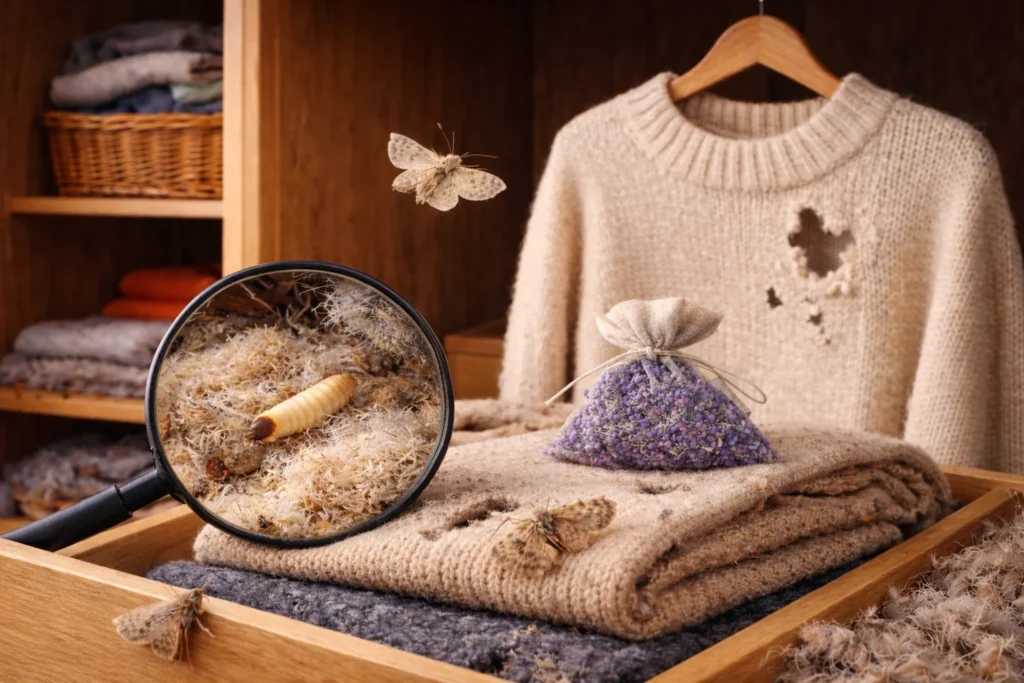
Finding small holes in a favourite wool jumper is frustrating, especially when the garment has been folded away throughout the summer. Clothes moths often work quietly and out of sight, and by the time you notice the damage, they may have been active for months. These pests can damage valuable natural fabrics, including wool, silk and cashmere. Understanding their life cycle, identifying early warning signs and preparing clothes properly can help protect your wardrobe before winter arrives.
It Is the Larvae That Cause the Damage
The adult moths you see fluttering near a wardrobe do not eat fabric. The actual damage is caused by their larvae. The common clothes moth lays its eggs on or near suitable natural fibres. After hatching, the larvae feed on keratin, a protein found in materials such as wool, silk, cashmere, fur and feathers.
They are particularly attracted to garments containing traces of sweat, food, body oils or other organic material. This is why clothes that have been worn and stored without cleaning can be especially vulnerable. The larvae may remain hidden in seams, folds and dark storage areas, making an infestation difficult to notice at first.
Signs You Have Clothes Moths
Regular wardrobe inspections can help identify an infestation before it spreads. Look for these common warning signs:
- Small, irregular holes in wool, silk or other natural-fibre garments.
- Thin, silky tubes or webbing attached to fabric surfaces.
- Tiny grains of debris or droppings around folds and seams.
- Small, pale moths that tend to hide or run rather than fly towards light.
- Damage appearing repeatedly on clothes stored in the same area.
Clothes moths prefer dark, quiet and undisturbed locations. Storage boxes, the back of wardrobes, spaces underneath beds and rugs beneath heavy furniture are common hiding places. Checking these areas is just as important as inspecting the clothes themselves.
Preparing Wool Clothes for Winter Storage
Cleanliness is one of the most effective ways to protect wool garments. Before storing seasonal clothing, wash or dry clean each item according to its care label. This helps remove sweat, food particles and body oils that may attract egg-laying female moths.
Allow every garment to dry completely before putting it away. Even slightly damp clothing can develop unpleasant odours and create conditions that encourage other fabric-related problems.
Choose sealed storage bags or airtight containers instead of leaving wool garments on open shelves. Cardboard boxes and loosely covered storage areas offer less protection because moths may still find their way inside. Keep storage containers in clean, dry places and avoid overcrowding them.
Cedar wood and lavender are often recommended as natural moth deterrents. Their scents may help discourage some moth activity, but they cannot reliably eliminate eggs, larvae or an existing infestation. Therefore, they should be treated as additional precautions rather than a replacement for proper cleaning and sealed storage.
Dealing with an Active Clothes Moth Infestation
If you discover holes or other signs of moth activity, empty the affected wardrobe completely. Inspect every garment carefully, paying particular attention to seams, collars, cuffs and folded areas where larvae may hide.
Vacuum shelves, corners, wardrobe joints, skirting boards and the floor underneath furniture. After cleaning, empty the vacuum cleaner or dispose of its bag outside to reduce the chance of pests remaining in the home.
Wash suitable garments according to their care instructions. Delicate wool and cashmere pieces may require professional dry cleaning. Some people also use freezing as a treatment for delicate items. Place suitable garments in sealed bags and follow reliable freezing guidance, including an appropriate temperature and duration, rather than assuming a short period will always eliminate every egg and larva.
Do not focus only on the wardrobe. Wool rugs, upholstered furniture, felt materials, blankets and other stored textiles can also provide places for larvae to develop. Inspecting these items helps prevent the infestation from returning after cleaning.
Keep Your Wardrobe Protection Routine Going
Preventing clothes moths requires regular attention throughout the year. Moths are more likely to become established in wardrobes and storage spaces that remain closed and undisturbed for long periods.
Air out stored clothes occasionally, shake suitable garments and rotate the items you wear. Vacuum wardrobe interiors, storage shelves and nearby carpets regularly. Avoid leaving worn clothes in piles for long periods, especially if they contain sweat or food stains.
Pheromone traps can also help monitor moth activity. These traps attract male moths and provide an indication of whether clothes moths are present. However, they do not eliminate an infestation on their own, so continue inspecting and cleaning affected areas.
When It Is Time for Professional Help
If moths continue returning despite thorough cleaning, or you discover damage across several rooms, the source may be hidden in carpets, insulation or forgotten storage areas. In such situations, professional assistance may be useful.
A professional skadedyrsanering service can help identify the source of the infestation, assess affected areas and recommend suitable treatment for the home. Professional advice is particularly valuable when valuable clothing, large carpets or multiple storage spaces are involved.
Protect Your Wool Before Winter
Clothes moths can cause considerable damage when their presence goes unnoticed, but regular inspections and proper storage can reduce the risk. Clean garments before putting them away, use sealed containers, vacuum storage areas and check natural-fibre textiles throughout the year.
With a consistent prevention routine, your favourite wool jumpers, coats and cashmere garments can remain in good condition and be ready to wear when colder weather arrives.
You may also like
-
Challenges That Affect Mental Health and How to Address Them
-
Why We Age at the Cellular Level, Explained
-
Grocery Store Slip and Fall Claims and Washington Law in Redmond
-
The Rough Spots Your Toothbrush Can’t Fix: When to Book a Clean
-
The Colours We See: Why Two People Can Perceive the Same Scene Differently