
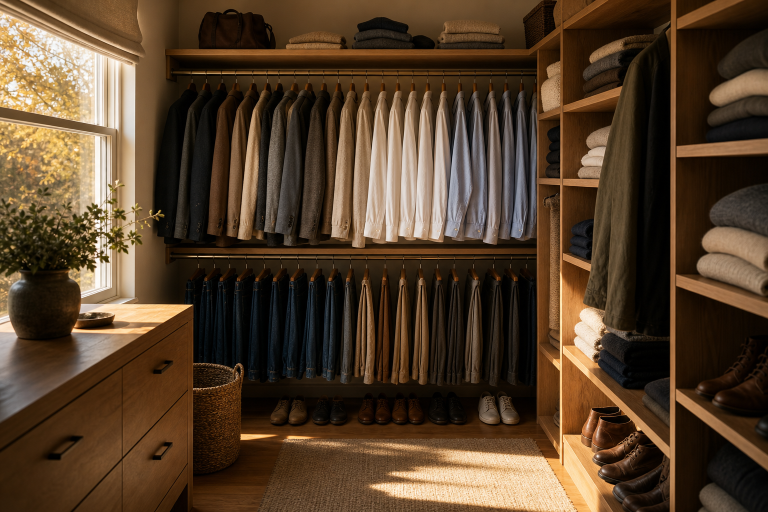
Most people don’t have a clothing shortage. They have a combination shortage. The closet is full, yet getting dressed still feels like a puzzle because half the pieces only work with one other item.
A flexible wardrobe fixes that. It’s built from a small number of pieces that work together in many ways, and it adapts to weather, plans, and moods without needing a new outfit each time. Here’s how to build one, starting with the foundation and working outward.
What Makes a Wardrobe Flexible?
Flexibility comes down to compatibility. A piece earns its place when it works with at least three other things you already own.
Test this before buying anything. Picture the item with your favorite bottoms, your most-worn shoes, and your go-to jacket. If you can’t imagine it in three outfits, it’s probably a “special occasion” purchase rather than a wardrobe building block.
This doesn’t mean everything has to be plain. It means the foundation should be easy to combine, so your more distinctive pieces have something to stand on.
Start With Everyday Basics
Basics are the garments you reach for without thinking. They do the daily work, so they deserve the most attention to fit and fabric.
The Core List
A solid foundation usually includes:
- Two or three well-fitted tees in neutral shades
- A pair of versatile trousers or dark denim
- A comfortable pair of joggers or relaxed pants
- A crewneck sweatshirt or hoodie
- A clean pair of everyday sneakers
For the sweatshirt category, color choice matters more than people expect. Lighter neutrals brighten an outfit and pair easily with darker bottoms, which is why a wholesale white sweatshirt is a common staple in basics ranges for retailers and small brands. At the personal level, the same logic applies: a clean, light layer sits comfortably with denim, charcoal, olive, and nearly everything else.
Prioritize Fit Over Quantity
One well-fitted tee beats five that almost fit. Check shoulder seams, sleeve length, and hem placement. If the proportions feel right in the mirror, you’ll wear the piece more often, and a piece that gets worn is the whole point.
Choose a Palette You Can Actually Mix
Color is where flexibility is won or lost. A wardrobe in twelve unrelated shades will always feel harder to dress than one in five or six related ones.
A simple approach is to pick two or three base neutrals (black, navy, gray, cream or tan), add one or two supporting tones such as olive, rust or dusty blue, and finish with a single accent you genuinely like.
When your palette repeats, outfits assemble themselves. Any top works with any bottom, and layering becomes a matter of grabbing what’s closest.
Understand the Role of Layers
Layers are what turn a basic wardrobe into a year-round one. Instead of buying separate outfits for each season, you add or remove pieces as conditions change.
Think in Three Layers
- Base layer: the tee, tank,k or fitted top closest to the skin.
- Mid layer: the sweatshirt, knit, flannel, el or cardigan that adds warmth and visual interest.
- Outer layer: the jacket, overshirt, or coat that handles weather.
Each layer should be wearable on its own and in combination. A mid layer that only looks right under a specific jacket isn’t pulling its weight.
Layering Pieces Worth Owning
A few versatile options cover most situations:
- A lightweight overshirt or shacket that works over tees or under coats
- A quarter-zip or crewneck knit for cooler days and smart-casual settings
- A zip hoodie, which opens up easy layering over almost any top
- A simple bomber, denim or field jacket that suits mild weather
- A scarf or beanie, the smallest layer and often the most useful
Mind Proportions When You Layer
Layering goes wrong when the pieces fight each other. Bulky on bulky creates a boxy silhouette, while too many thin layers can look cluttered.
A reliable rule is to let one layer be the statement and keep the others quiet. If your jacket is roomy, wear a closer-fitting mid layer. If your sweatshirt is oversized, keep the base layer slim. Letting a hem peek out from under another layer adds dimension without any extra effort.
Texture helps too. Pairing smooth cotton with brushed fleece or a ribbed knit gives depth even when everything is in the same color family.
Invest in Fabric Quality Where It Counts
Flexible wardrobes depend on repetition, so quality shows up quickly. A tee that stretches out or a sweatshirt that pills after a few washes loses its place in the rotation.
Focus your budget on the pieces you wear most and the pieces that sit closest to the body or take the most abuse. Look for tightly knit fabrics, consistent dye, and sturdy stitching at seams and cuffs. Wash a new item a couple of times before judging it. If it holds its shape and color, it’s earned a permanent spot.
If you’re comparing sources, whether you’re stocking a small shop or simply researching what’s out there, it helps to browse a range of catalogs. Looking at something like Simplistic Apparel alongside other options gives you a clearer sense of fabric weights, cuts,s and color choices before you decide what fits your needs.
Seasonal Adjustments Without Starting Over
You don’t need a new wardrobe every quarter. Keep your core in place and rotate the edges.
- Cooler months: add heavier mid-layers, knit textures, and deeper accent colors.
- Warmer months: lean on lighter fabrics, short sleeves,s and a thin overshirt for evenings.
- Transitional weather: this is where layering shines. Tee, sweatshirt, and light jacket give you three ways to adjust through the day.
Rotating just a few items each season keeps things fresh while the foundation stays steady.
Edit Regularly
Flexibility needs maintenance. Once or twice a year, pull everything out and sort it into three piles: worn often, worn rarely, and never worn. The “never worn” pile tells you what to stop buying. The “worn often” pile tells you exactly what a good piece looks like for you, and what to replace when it wears out.
Conclusion
A flexible wardrobe isn’t about owning more. It’s about owning pieces that cooperate. Start with fitted, comfortable basics, stick to a palette that repeats, and add layers that work alone and together. Choose fabrics that last, edit as you go, and let each new piece prove it can join at least three outfits.
Do that consistently and getting dressed stops being a puzzle. It becomes a quick, easy decision.