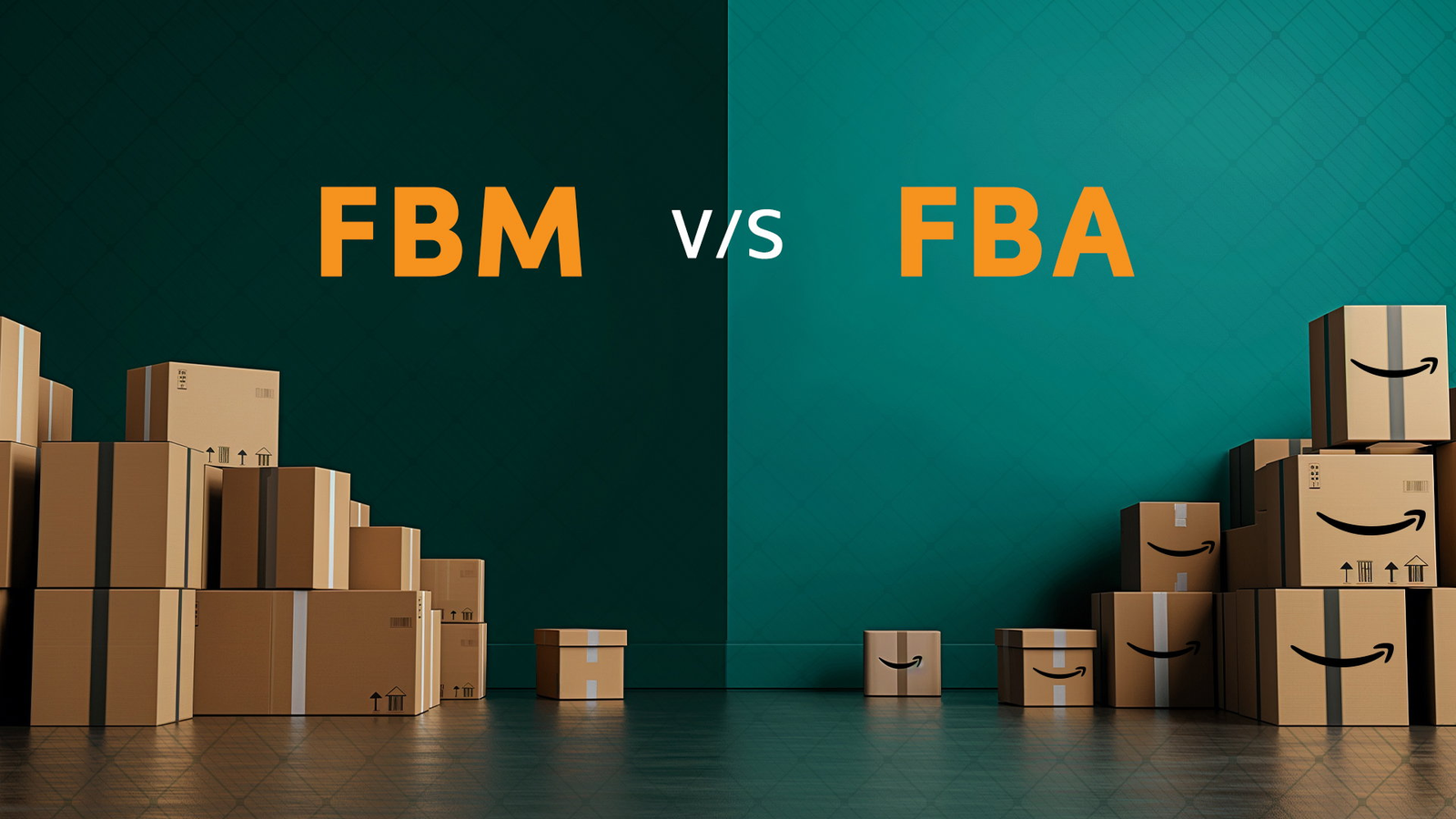
Every repricing setup asks you a question that sounds technical and is actually strategic: which offers should the rule compare you against? FBA offers, merchant-fulfilled offers, or everything on the listing?
Sellers tend to click through this as configuration detail. It is not. Your comparison set determines which competitor sets your price, and choosing the wrong one is the most common reason a correctly configured repricer produces commercially wrong results.
Why the Choice Matters at all
An FBA offer and a merchant-fulfilled offer at the same price are not the same offer to a customer. They carry different delivery promises, different returns experiences, and different levels of implicit trust.
Amazon’s own evaluation reflects this. Price, delivery speed, seller performance and inventory signals all feed the Featured Offer decision. This became more pointed in 2026: Amazon began removing the separate seller eligibility gate for the Featured Offer from July that year, with the US rollout starting in early July and the EU and UK following later in the month. Offers now enter consideration automatically — but consideration is not placement, and the ranking inputs were not removed. If anything, the non-price inputs now carry more of the differentiating weight.
The practical implication: if you are FBA and your rule competes against merchant-fulfilled offers with slower delivery, you are instructing it to match the price of a weaker offer. You will frequently give up margin you did not need to give up, because you would have held the position at a higher price on delivery speed alone.
The Four Situations and What Each Calls for
You are FBA, your main competitors are FBA. Compete against FBA offers only. This is the cleanest case — like against like, delivery promises broadly comparable, price doing the deciding work it is supposed to do.
You are FBA, your main competitors are merchant-fulfilled. This is where sellers lose the most. Your delivery advantage is real and it is worth money. Competing against FBM offers tells your rule to discard that advantage and fight on price instead. Set your comparison to FBA offers, and if you are the only FBA offer, consider a sales-based or target-price approach rather than a competitive one — because there is no comparable offer to react to.
The uncomfortable corollary: if you cut your FBA price to match a slower FBM offer and still lose the position, price was never the issue, and you have now simply made less money.
You are merchant-fulfilled, your competitors are FBA. The reverse problem, and the one that requires honesty. Competing on price against FBA offers means accepting that you need a price advantage to offset a delivery disadvantage — and you need to know how large that gap is before you authorise your automation to chase it. If matching FBA prices does not win you the position, matching them is pure margin donation.
The better move here is usually operational before it is pricing: reduce handling time, tighten your transit promise, and consider whether Seller Fulfilled Prime or a faster carrier service changes the comparison. A day of delivery speed is frequently worth more than the discount you were about to offer, and unlike a discount, nobody can match it instantly.
Mixed catalogue, mixed competition. Segment. One comparison setting across a catalogue with different competitive structures guarantees being wrong on part of it. Group by competitive shape, not by product category.
The Exclusion Question Nobody Asks Early Enough
Beyond FBA versus FBM, there is a second-order decision that matters more than most sellers realise: which individual competitors to exclude.
On many contested ASINs, the lowest offer belongs to a seller you have no commercial reason to chase — very low feedback, long handling times, an offer unlikely to be fulfilled promptly, or an account clearing stock at liquidation prices. If your rule competes against the lowest offer on the listing, that seller is setting your price and, through you, the price of everyone else running similar logic.
This is also the clearest functional gap between Amazon’s free rule-based tooling and third-party systems. Amazon’s Automate Pricing competes against defined references — the Featured Offer price, the lowest price, an external competitive price. Filtering specific competitors out of the comparison set is where paid tools generally lead, and on a crowded ASIN with one undisciplined seller it can be the single capability that justifies the subscription.
How to Actually Make the Decision
Spend a week observing rather than reasoning from first principles.
For each of your top ASINs, record three times a day: the offers present, each offer’s fulfilment method, the Featured Offer holder, and the Featured Offer price.
Then answer three questions.
Does the Featured Offer price consistently sit above the lowest offer?
If yes, price is not the deciding factor on this ASIN and your comparison should target the Featured Offer, not the lowest offer.
Does the Featured Offer rotate among sellers with a particular fulfilment method?
If FBA offers hold the position at prices above FBM offers, your delivery promise is doing measurable work. Compete within your own fulfilment class.
Which sellers hold position at the highest prices?
Study them. They have found the non-price advantage on this listing, and it is usually delivery speed or inventory depth.
The Default Worth Starting From
If you need a starting position before you have done the observation:
- Compete against the Featured Offer price, not the lowest offer on the listing. The lowest offer is frequently an outlier, and reacting to outliers is how a price group collectively descends.
- Compete within your own fulfilment class where you have a delivery advantage, and only across classes where you do not.
- Exclude sellers you would not want to match if your tooling allows it.
- Let the rule move upward as well as downward, so your price recovers when the offer that set it disappears.
Those four settings resolve more pricing problems than any change to the price itself.
The research team at PricingMag has worked through the full decision for sellers unsure whether to compete with FBA sellers, FBM sellers, or both, including how to run the observation week and how to segment a mixed catalog.
The price your repricer picks is downstream of the competitor you told it to watch. That is the decision worth spending time on.